The current size of the RWA market
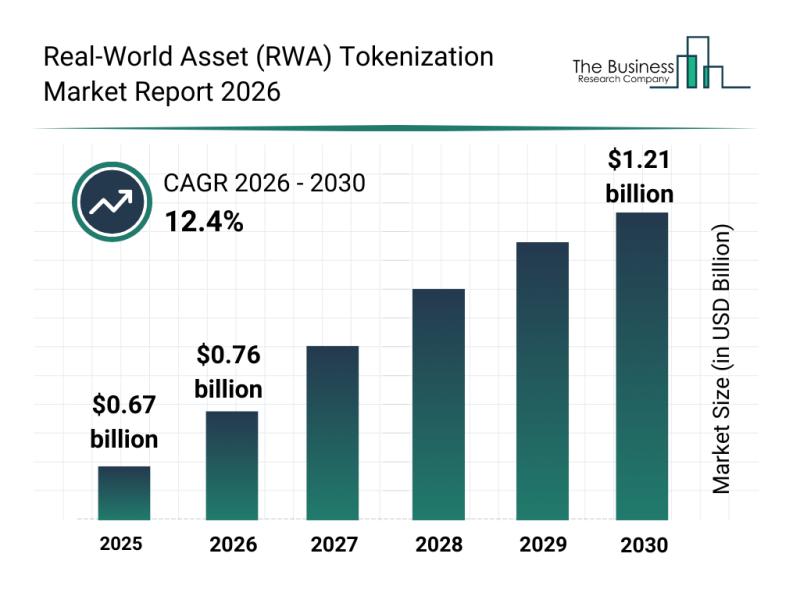
The real-world asset (RWA) tokenization market has reached a scale that demands precise definition. By late 2025 and into 2026, the total value of tokenized assets crossed the $60 billion mark. However, this headline number is misleading without context. The majority of this value comes from stablecoins, which are already liquid fiat currencies represented on-chain. They do not represent the "real-world" asset growth that institutional investors are tracking.
When we exclude stablecoins, the underlying RWA market—comprising treasury bills, private credit, real estate, and commodities—sits between $31 billion and $36 billion. This discrepancy is critical. It separates the novelty of on-chain money from the substance of on-chain ownership. The $31–36 billion figure represents actual capital deployed into traditional assets via blockchain rails. Sources like the Canton Network and Stobox reports confirm this range, noting that fragmentation across multiple blockchains makes a single precise number difficult to pin down, but the $30B+ floor is solid.
This growth trajectory is not accidental. It reflects a deliberate shift by institutions seeking yield and efficiency. The market is no longer just about technology; it is about utility. As more traditional assets move on-chain, the distinction between "crypto" and "finance" continues to blur. The real question for 2026 is not how big the market is, but which asset classes can sustain this growth without regulatory friction.
Asset classes driving institutional adoption
Real-world asset (RWA) tokenization crossed the $60 billion milestone in 2026, spanning over 7,000 distinct products. Yet, despite this broad expansion, the market remains heavily skewed. Only one asset class has achieved full institutional readiness for prime-time deployment. While private credit and real estate are growing, they still face regulatory and structural hurdles that limit broad adoption. Treasury bills, however, have emerged as the clear winner, offering the liquidity and compliance clarity that traditional finance requires.
U.S. Treasury Bills
U.S. Treasury bills are the dominant force in RWA tokenization, accounting for the vast majority of on-chain value. Their success stems from standardization and regulatory familiarity. Institutions can seamlessly integrate tokenized treasuries into existing risk management frameworks without navigating complex legal gray areas. The asset class benefits from a well-understood yield curve and high liquidity, making it an ideal substitute for traditional money market funds.
The appeal lies in the efficiency gains. Tokenized treasuries settle instantly, reducing counterparty risk and operational overhead. Major financial institutions are increasingly using these digital assets for collateral management and liquidity buffers. This shift represents a fundamental change in how institutions view short-term government debt, moving from physical certificates to programmable, on-chain instruments.
Private Credit
Private credit represents the next frontier for RWA tokenization, offering higher yields than traditional treasuries. This asset class involves lending to companies that cannot access public bond markets. Tokenization allows for fractional ownership, enabling smaller institutional investors to participate in high-value private debt deals. However, the sector is still maturing. Valuation transparency and secondary market liquidity remain significant challenges.
Despite these hurdles, the potential is substantial. Tokenized private credit can democratize access to alternative investments, which have historically been reserved for wealthy individuals and large institutions. As regulatory frameworks evolve, we expect to see more platforms emerge that focus on standardizing these complex instruments. For now, private credit remains a niche but promising segment of the RWA market.
Real Estate
Real estate tokenization offers the promise of fractional ownership in physical properties, from commercial buildings to residential complexes. By breaking down large assets into smaller, tradable tokens, this sector aims to increase liquidity in a traditionally illiquid market. Investors can buy and sell shares of a property with the same ease as trading stocks, potentially unlocking trillions in dormant value.
However, real estate faces unique challenges. Each property is unique, requiring individual due diligence and legal structuring. Regulatory compliance varies significantly by jurisdiction, making cross-border investments complex. While several platforms are experimenting with this model, widespread institutional adoption is still years away. Real estate tokenization is more about long-term value creation than immediate liquidity.
Why Only One Asset Class Leads
The dominance of Treasury bills highlights a critical insight: institutional adoption requires simplicity. Complex assets like private credit and real estate require extensive legal and operational infrastructure that is not yet standardized across the industry. Treasury bills, by contrast, are simple, standardized, and backed by the full faith and credit of the U.S. government. This simplicity makes them the only asset class that institutions feel comfortable deploying significant capital into right now.
As the RWA ecosystem matures, we may see other asset classes catch up. But for now, Treasury bills are the undisputed leader. They provide the liquidity, transparency, and regulatory clarity that traditional finance demands. This focus on simplicity over complexity will likely define the RWA market for the foreseeable future.
Leading RWA tokenization platforms
Use this section to make the RWA Tokenization decision easier to compare in real life, not just on paper. Start with the reader's actual constraint, then separate must-have requirements from details that are merely nice to have. A practical choice should survive normal use, maintenance, timing, and budget. If a recommendation only works in an ideal situation, call that out plainly and give the reader a fallback path.
| Factor | What to check | Why it matters |
|---|---|---|
| Fit | Match the option to the primary use case. | A good deal still fails if it does not fit the job. |
| Condition | Verify age, wear, and service history. | Hidden condition issues erase upfront savings. |
| Cost | Compare purchase price with likely upkeep. | The cheapest option is not always the lowest-cost option. |
The fragmentation bottleneck
As the RWA tokenization market surpassed $36 billion in late 2025, a structural bottleneck emerged: liquidity is trapped behind chain walls. Assets issued on one blockchain often cannot be easily transferred to another, creating isolated pools of capital that fail to reach the deepest order books. This fragmentation acts as a friction tax, preventing the unified global markets that institutional investors require for efficient pricing and risk management [src-serp-1].
Interoperability is not merely a technical convenience; it is the prerequisite for scale. Without standardized protocols that allow seamless communication between disparate ledgers, tokenized assets remain siloed. This fragmentation dilutes liquidity, widens bid-ask spreads, and complicates compliance checks across jurisdictions. The industry’s next phase of growth depends on solving these cross-chain connectivity issues to create a single, liquid global market for real-world assets.
| Feature | Fragmented State | Interoperable State |
|---|---|---|
| Liquidity | Siloed across chains | |
| Pricing | Inefficient, wide spreads | |
| Compliance | Complex cross-jurisdiction checks | |
| Liquidity | Unified global pool | |
| Pricing | Deep, competitive spreads | |
| Compliance | Standardized protocol checks |
Regulatory outlook and compliance
By 2026, RWA tokenization has shifted from experimental blockchain innovation to core institutional financial infrastructure. This transition is driven by evolving compliance frameworks designed to support institutional capital entry. Regulators in major markets are moving away from broad prohibitions toward specific, asset-class-based rules that provide legal certainty for tokenized securities, real estate, and private credit.
The regulatory landscape is no longer fragmented by jurisdiction but is increasingly harmonized through shared standards. Institutions require clear guidelines on custody, reporting, and investor accreditation to deploy capital at scale. The European Union’s Markets in Crypto-Assets (MiCA) regulation and similar frameworks in Asia have established baseline requirements for token issuance and secondary trading, reducing the legal gray areas that previously hindered large-scale adoption.
Compliance is now embedded into the token lifecycle rather than applied as an afterthought. Smart contracts are increasingly integrated with on-chain identity verification and automated regulatory reporting tools. This "compliance-by-design" approach allows platforms to enforce transfer restrictions and audit trails in real time, meeting the stringent requirements of traditional financial institutions.
The result is a more stable environment for RWA markets. As regulatory clarity improves, the barrier to entry for institutional investors lowers, paving the way for deeper liquidity and broader asset classes to be tokenized. The focus has shifted from whether tokenization is legal to how efficiently it can be integrated into existing financial systems.
No comments yet. Be the first to share your thoughts!