The $60 Billion RWA Tokenization Market
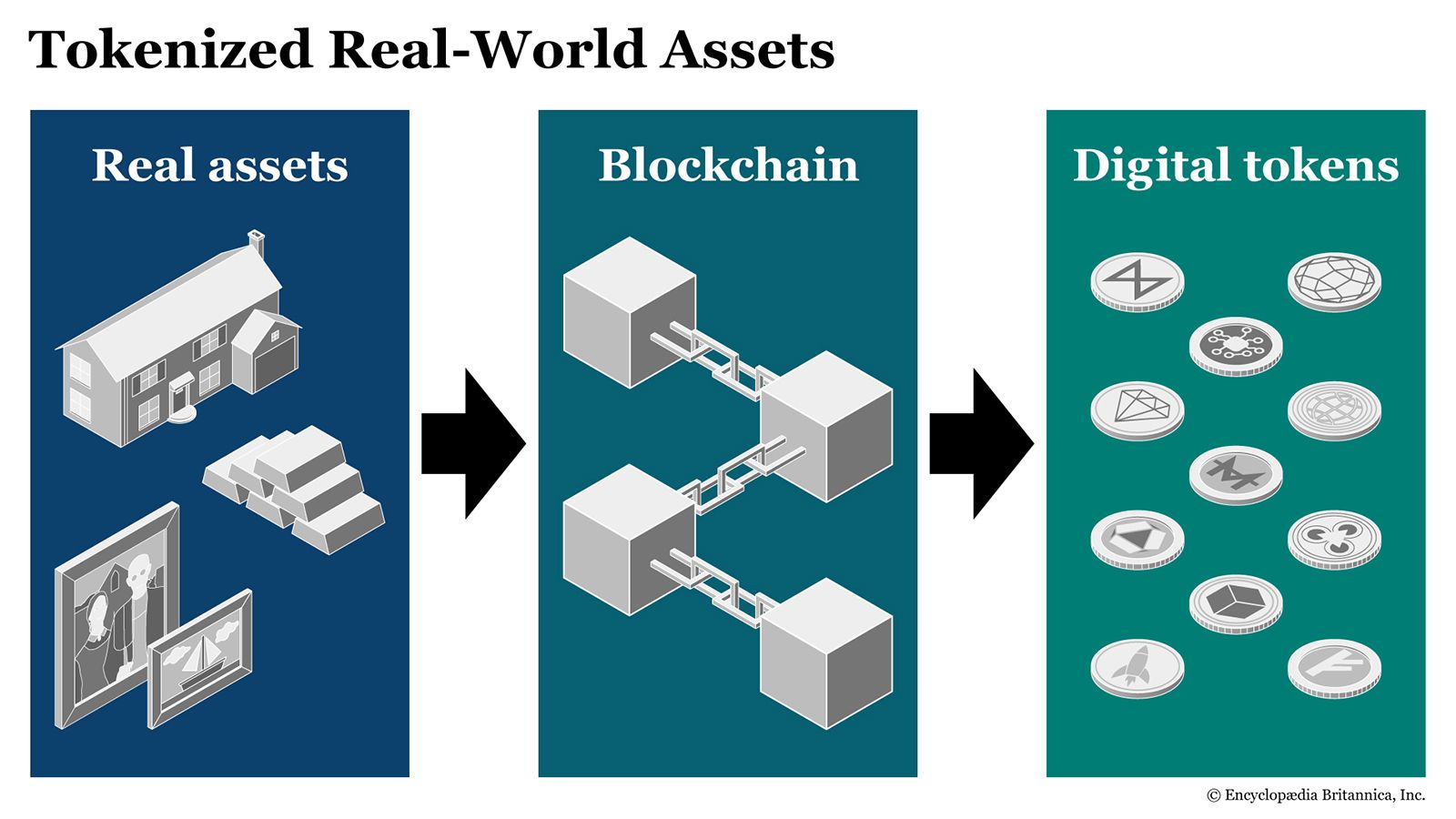
The narrative around real-world asset (RWA) tokenization has shifted from speculative experimentation to measurable market scale. By 2026, the total market capitalization for tokenized real-world assets has surpassed $60 billion, a significant jump from the mid-2025 figures that hovered around $36 billion. This growth is not merely theoretical; it is backed by over 7,000 distinct tokenized products operating across various blockchain networks.
While the aggregate number is impressive, the distribution of value is heavily concentrated. Tokenized U.S. Treasuries dominate the sector, accounting for approximately $12.8 billion of that total. This specific asset class has become the primary vehicle for institutional adoption, offering a bridge to decentralized liquidity. Other categories, such as private credit and real estate, have seen slower uptake, leaving government debt as the clear leader in terms of volume and stability.
The rapid expansion to this $60 billion valuation highlights a maturing infrastructure. Early hurdles regarding regulatory clarity and custody solutions have been largely addressed for sovereign debt, allowing major financial players to integrate these tokens into their existing portfolios. As the market continues to grow, the focus remains on replicating this Treasury-like success in other asset classes, though the $12.8 billion hold in treasuries alone suggests that short-term growth will remain debt-centric.
BlackRock BUIDL Sets the Institutional Standard
BlackRock’s BUIDL fund has become the anchor for institutional adoption in the tokenized asset space. By issuing a tokenized money market fund on the Ethereum blockchain, BlackRock demonstrated that major financial institutions can participate in decentralized finance (DeFi) without sacrificing regulatory compliance or security. This move transformed RWA tokenization from a niche experimental concept into a core component of institutional financial infrastructure.
The scale of this adoption is evident in the current market data. As of 2026, the total market capitalization of RWA tokens has reached approximately $60 billion. A significant portion of this value is driven by tokenized U.S. Treasuries, which now account for $12.8 billion in assets. BUIDL serves as the benchmark for this growth, proving that traditional finance giants can bridge the gap between legacy banking systems and blockchain technology.
This institutional entry provides a new standard for compliance and custody. Unlike earlier, less regulated DeFi protocols, BUIDL integrates strict Know Your Customer (KYC) and Anti-Money Laundering (AML) checks directly into the token’s smart contract layer. This ensures that only verified investors can hold the asset, addressing the primary concerns that kept large institutions on the sidelines. The fund generates yield from short-term U.S. government debt, offering a stable, transparent return that is accessible 24/7 on-chain.
The implications for DeFi liquidity are profound. By bringing billions of dollars of institutional capital into the blockchain ecosystem, BUIDL has expanded the available liquidity for other DeFi applications. Lenders and borrowers now have access to a deeper pool of capital backed by real-world assets. This integration does not replace traditional finance; rather, it extends its reach, allowing institutional-grade assets to flow seamlessly into decentralized markets.
The success of BUIDL has encouraged other traditional asset managers to explore tokenization. It has shown that the technology can handle the scale and security requirements of major financial players. As more institutions follow this model, the distinction between traditional finance and DeFi continues to blur, creating a more integrated and efficient global financial system.
Top Platforms Powering RWA Tokenization
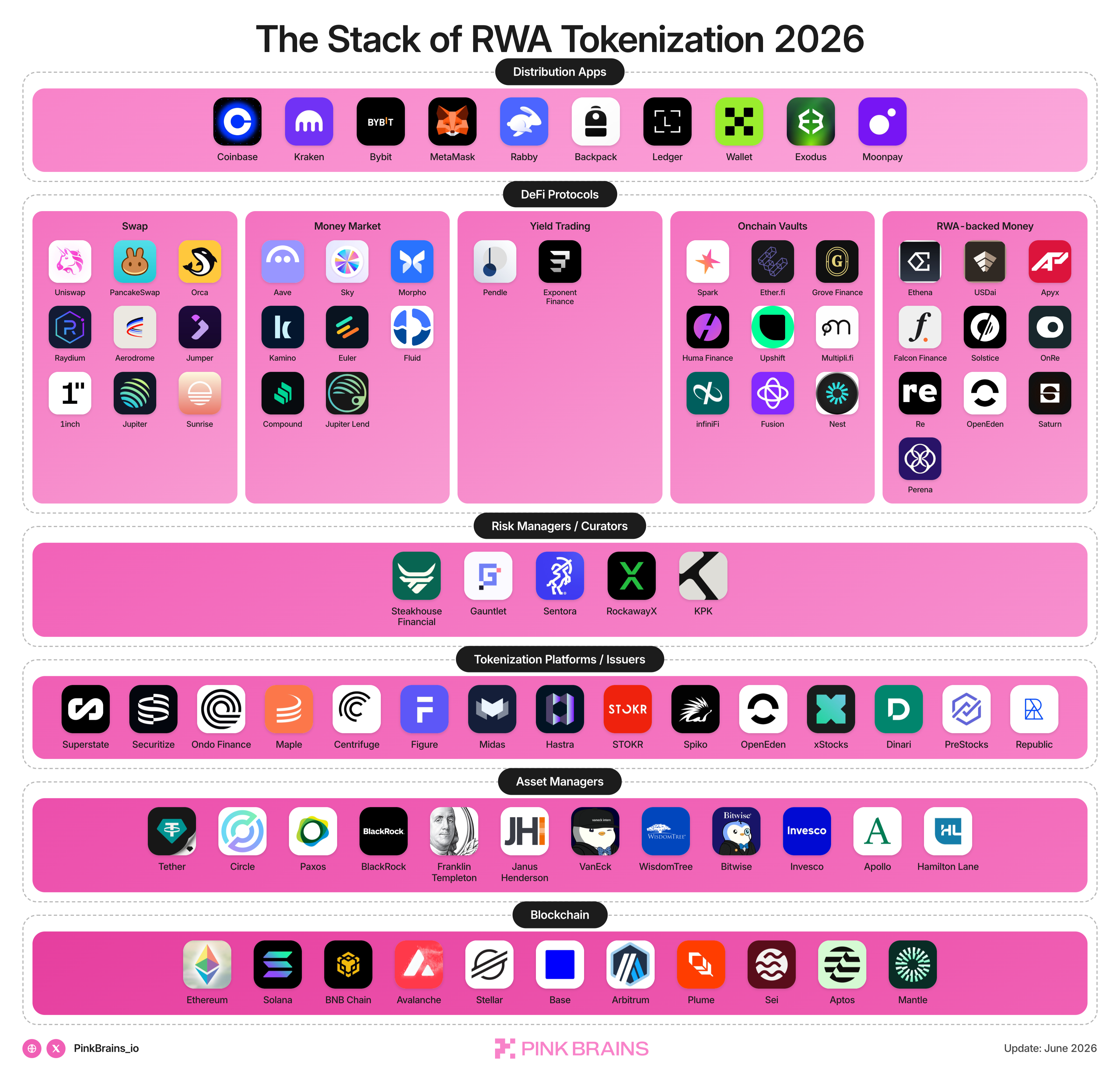
The $20 billion RWA tokenization market in 2026 is not dominated by a single provider. Instead, infrastructure is fragmented across specialized platforms that handle issuance, compliance, and secondary trading. Choosing the right platform depends on whether you are tokenizing U.S. Treasuries, private credit, or real estate.
Ondo Finance
Ondo Finance has become the primary gateway for institutional-grade tokenized U.S. Treasuries. Their platform bridges traditional finance with DeFi by offering products like OUSG (tokenized short-term treasuries) and USDY. Ondo handles the complex custodial relationships with traditional banks, allowing users to earn yield on-chain without managing off-chain paperwork. Their integration with major DeFi protocols ensures deep liquidity for these stable, yield-bearing assets.
Centrifuge
Centrifuge focuses on real-world assets that generate cash flow, such as invoice financing and real estate. It allows asset originators to tokenize loans and sell them to DeFi liquidity providers. This model opens up institutional capital to small businesses and property owners who might not qualify for traditional bank loans. Centrifuge’s infrastructure manages the legal wrappers and compliance checks required to bring these illiquid assets on-chain.
Maple Finance
Maple Finance specializes in institutional credit. It operates as a capital pool where institutions can lend directly to vetted corporate borrowers. By tokenizing these credit positions, Maple provides transparency and efficiency to the private credit market. Lenders can access yield from corporate loans, while borrowers benefit from faster settlement times and lower friction compared to traditional syndicated loans.
Securitize
Securitize provides the critical compliance and transfer agent layer for RWA tokenization. Rather than offering a trading venue, they supply the infrastructure that ensures token issuance meets regulatory standards like Reg D and Reg S. Their platform handles investor onboarding, KYC/AML checks, and secondary transfer restrictions, making it the backbone for many other platforms that need to issue compliant securities.
| Platform | Primary Asset Type | Key Function | Compliance Layer |
|---|---|---|---|
| Ondo Finance | U.S. Treasuries | Yield-bearing DeFi integration | Managed Custody |
| Centrifuge | Private Credit/Real Estate | Asset originator financing | Legal Wrappers |
| Maple Finance | Institutional Credit | Direct lending pools | Vetting & KYC |
| Securitize | Any Security | Transfer agent & issuance | Reg D/S Compliant |
On-Chain Money Market Yields in 2026
By 2026, the yield landscape for decentralized finance has shifted from speculative incentive emissions to tangible asset backing. Tokenized real-world assets, particularly U.S. Treasuries, now provide a stable, risk-adjusted baseline for on-chain liquidity. This structural change allows DeFi protocols to offer consistent returns without relying on volatile native token rewards.
The scale of this shift is evident in the market data. According to industry trackers like RWA.xyz, the total value of tokenized real-world assets surpassed $24 billion by February 2026, driven by a 266% growth rate throughout 2025. Within this broader category, tokenized Treasuries alone account for approximately $12.88 billion, representing the largest and most liquid segment of the on-chain asset class.
This influx of institutional-grade capital has fundamentally altered how money markets operate. Protocols can now source yield directly from government debt rather than inflating their own token supplies. The result is a more sustainable economic model where yields are anchored to real-world interest rates, reducing the systemic risk that previously plagued leveraged DeFi strategies.
As institutional adoption accelerates, the distinction between traditional finance and decentralized finance continues to blur. On-chain money markets are no longer just experimental playgrounds; they are becoming integral channels for accessing secure, yield-bearing assets. This integration signals a maturation of the crypto ecosystem, where value is derived from economic fundamentals rather than mere network effects.
Fragmentation and the Path to Unified Liquidity
The tokenized real-world asset (RWA) market has grown rapidly, surpassing $36 billion in market capitalization as of late 2025, excluding stablecoins. This growth, however, has been unevenly distributed across different blockchain networks. The result is a fragmented landscape where liquidity is trapped in isolated silos, making it difficult for institutions to move capital efficiently between different digital asset classes.
Think of the current RWA market like a collection of private clubs. Each club (blockchain) has its own membership rules, currency, and entry barriers. While the assets inside—like treasury bills or real estate—are valuable, they cannot easily be shared or traded between clubs. This fragmentation creates friction for institutional investors who require seamless access to deep, unified liquidity pools to manage risk and maximize returns.
To solve this, interoperability solutions are becoming essential. These protocols act as bridges, allowing assets to move freely between different chains without requiring complex manual conversions. For example, a tokenized U.S. Treasury bill issued on one network can now be utilized as collateral on a lending platform built on a completely different blockchain. This connectivity is transforming RWA from a niche experiment into a functional component of global finance.
The shift toward unified liquidity is critical for reaching the projected $60 billion market cap by 2026. As platforms like BlackRock integrate these interoperable standards, the market will likely see a consolidation of volume onto fewer, more robust networks. This trend promises to reduce costs and increase transparency, making tokenized assets as liquid and accessible as traditional financial instruments.
Evaluating RWA Tokenization Platforms
Choosing a platform for real-world asset tokenization is one of the most consequential decisions a project or fund can make in 2026. With the market crossing $60 billion in market cap, the gap between experimental pilots and core institutional infrastructure has widened. You need platforms that treat compliance not as an afterthought, but as the foundation of the token lifecycle.
Start with regulatory alignment. In 2026, institutional adoption hinges on whether the platform is built for specific jurisdictions like the EU’s MiCA or US stablecoin frameworks. A platform that lacks clear legal wrappers for tokenized treasuries or private credit creates immediate liquidity risks. Look for providers that embed compliance checks directly into the smart contract layer, ensuring that only verified, whitelisted wallets can hold the asset.
Custody security is the second non-negotiable. Real-world assets—whether they are US treasuries or real estate deeds—must be held by regulated, insured custodians. The token on-chain is merely a receipt; if the off-chain backing is weak, the on-chain value is worthless. Verify that the platform partners with established financial institutions for asset holding, not just tech-focused crypto custodians.
Finally, assess liquidity depth. A tokenized asset is only as good as its ability to be traded or redeemed. Platforms that integrate directly with regulated exchanges or offer built-in secondary markets provide the liquidity necessary for institutional confidence. Without this, you are holding a static asset that cannot be leveraged for yield or collateral.
Helpful gear
Use these product recommendations as a starting point, then choose the size, material, and price point that fit how you actually use the gear.

As an Amazon Associate, we may earn from qualifying purchases.
No comments yet. Be the first to share your thoughts!