Market size and growth trajectory
RWA tokenization 2026 has moved from experimental pilot programs to a substantial institutional asset class. By early 2026, the market has demonstrated clear momentum, with total value locked in tokenized real-world assets surpassing $24 billion by February, according to data from RWA.xyz. This figure represents a 266% year-over-year growth rate from 2025, signaling that the infrastructure is no longer in its infancy but is actively scaling to meet institutional demand.
The composition of this growth is heavily skewed toward traditional finance staples. Tokenized U.S. Treasuries have emerged as the dominant category, holding approximately $12.88 billion in value. This concentration highlights that institutional participants are primarily using tokenization for liquidity and settlement efficiency in short-term, high-grade debt rather than speculative exposure. Other data providers, such as RWA.io, suggest the total market size may be even higher depending on whether stablecoins are included in the valuation, with some estimates placing the broader RWA market (excluding stablecoins) above $36 billion as of late 2025.
Despite this growth, the market remains fragmented across multiple blockchains. This fragmentation creates operational friction for institutions that require seamless cross-chain visibility and compliance reporting. As the market matures, the focus is shifting from mere value accumulation to the development of interoperable standards that allow these tokenized assets to function as efficiently as their traditional counterparts.
Regulatory clarity drives institutional entry
The primary barrier to institutional adoption of RWA tokenization has been legal uncertainty. By 2026, frameworks like the EU’s MiCA and evolving SEC guidance have reduced this ambiguity, allowing traditional finance to participate with defined compliance parameters. This shift transforms tokenization from a speculative experiment into a regulated market infrastructure.
Regulatory clarity provides the legal certainty required for large-scale capital deployment. When rules are clear, institutions can assess risk accurately and allocate resources. This environment supports the growth of tokenized securities, funds, and real estate, which require strict adherence to securities laws and anti-money laundering protocols.
Top platforms for compliant tokenization
Selecting infrastructure for RWA tokenization 2026 requires balancing regulatory adherence with technical interoperability. As the market consolidates, institutional players prioritize platforms that offer clear legal wrappers and seamless fiat on-ramps. The following comparison highlights leading providers based on compliance standards, supported asset classes, and target audience.
| Platform | Compliance Focus | Primary Assets | Target Audience |
|---|---|---|---|
| Polymath | SEC Reg D/S, MiCA | Equities, Funds | Institutional |
| Securitize | SEC Reg D/S, ISO 20022 | Private Credit, Real Estate | Institutional |
| Centrifuge | GDPR, Asset-Backed | Real Estate, Receivables | DeFi / Institutional |
| Ondo Finance | SEC Reg S, US Treasuries | T-Bills, Money Market | Institutional / HNW |
Polymath and Securitize dominate the regulated securities space, offering robust legal frameworks for equity and private credit issuance. Their infrastructure is designed for high-stakes institutional adoption, ensuring that tokenized assets meet strict KYC/AML requirements. These platforms are ideal for funds seeking to tokenize traditional financial instruments with minimal regulatory friction.
Centrifuge and Ondo Finance represent a different approach, focusing on asset-backed tokens and US Treasury yields. Centrifuge bridges real-world assets like invoices and real estate with DeFi protocols, while Ondo provides compliant access to US government debt. These platforms are particularly relevant for investors seeking yield-bearing RWA tokenization 2026 solutions that integrate with broader digital asset ecosystems.
Asset categories dominating the market
The RWA tokenization 2026 landscape is defined by a heavy concentration in low-risk, highly regulated asset classes. While the sector has expanded beyond its initial focus, the primary volume remains anchored in government debt and physical commodities. This dominance reflects the current regulatory preference for assets with transparent legal frameworks and established custodial standards.
Tokenized treasuries remain the largest segment, serving as the backbone of on-chain liquidity. As of early 2026, tokenized U.S. Treasuries accounted for approximately $12.88 billion in total value [src-serp-2]. This category appeals to institutional investors seeking yield on stablecoins while maintaining compliance with securities laws. The growth here is driven by the integration of these assets into decentralized finance protocols, allowing for efficient collateralization without traditional banking intermediaries.
Commodities represent the second major pillar, capturing 28.7% of the sector's value by the end of Q1 2026 [src-serp-6]. Gold and other precious metals are frequently tokenized to provide liquidity for physical reserves, bridging the gap between traditional commodity markets and digital wallets. This segment benefits from clear ownership verification processes and growing demand for inflation hedges within the crypto ecosystem.
Other categories, such as tokenized stocks and real estate, remain smaller but are gaining traction. Tokenized stocks hold a 2.5% market share, while tokenized ETFs and private credit segments continue to develop [src-serp-6]. The slower adoption in these areas is largely due to complex regulatory hurdles and the need for more sophisticated legal structures to handle fractional ownership and voting rights.
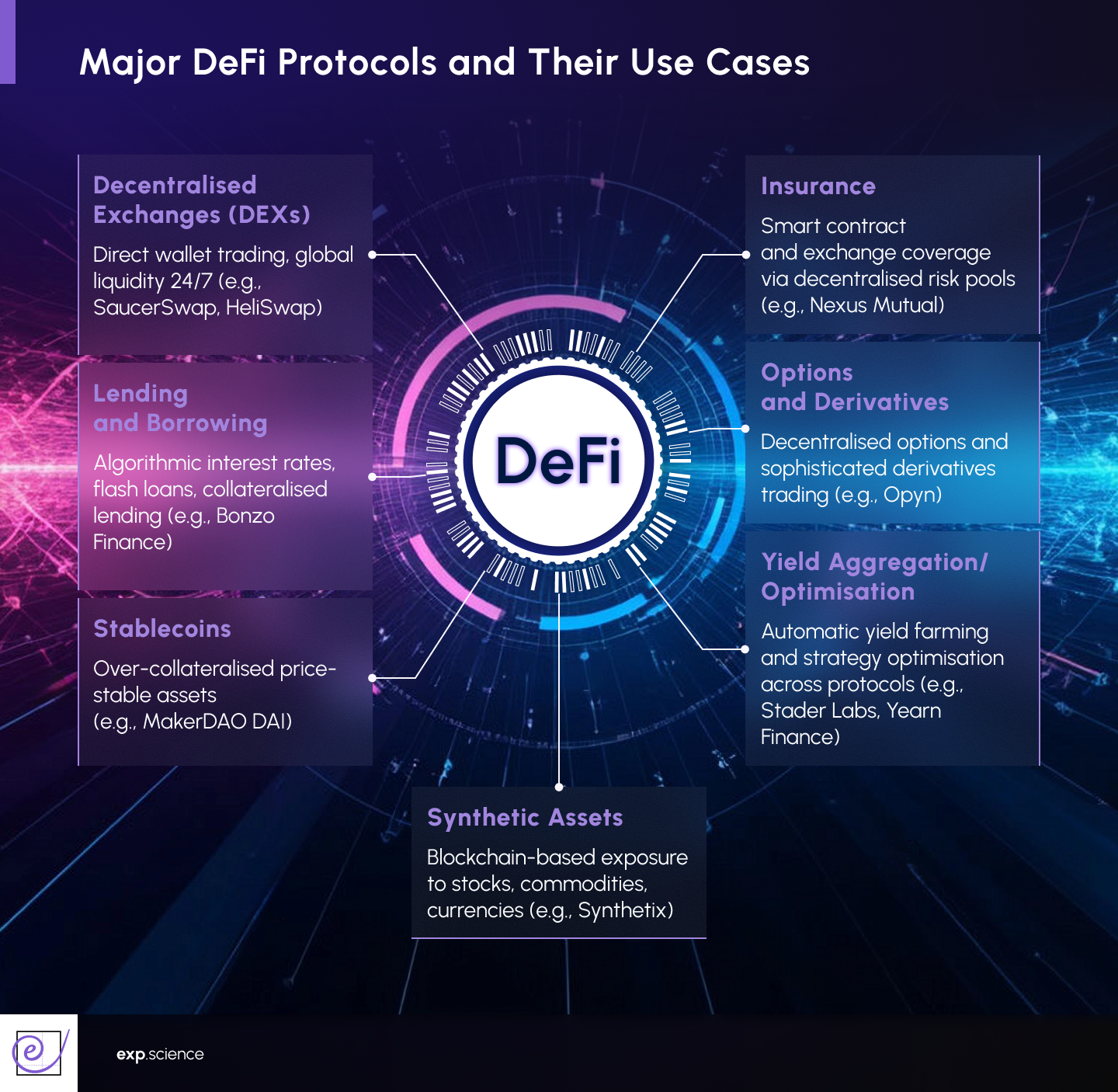
The concentration in treasuries and commodities suggests that RWA tokenization is currently driven by efficiency and yield rather than speculative innovation. As regulatory clarity improves, we expect to see a gradual diversification into more complex asset classes, but the core market will likely remain anchored in these proven, compliant categories for the foreseeable future.
Liquidity Fragmentation and Cross-Chain Interoperability
The rapid expansion of the real-world asset tokenization market has introduced a structural bottleneck: liquidity fragmentation. As the market for tokenized RWAs (excluding stablecoins) exceeded $36 billion by late 2025, assets became increasingly siloed across disparate blockchain networks. This fragmentation restricts the efficiency of capital deployment, as institutions cannot easily access deep liquidity pools without navigating complex interoperability bridges.
Cross-chain interoperability remains the primary technical hurdle for mass adoption. While the Canton Network and other enterprise-grade protocols are developing solutions to allow assets to move seamlessly between permissioned and public ledgers, the current landscape is characterized by isolated ecosystems. Without standardized protocols for atomic swaps and cross-chain settlement, the full potential of RWA tokenization 2026 cannot be realized.
Looking ahead, the integration of tokenized securities into traditional DeFi protocols is expected to drive the next wave of growth. Market projections suggest the sector could reach trillions in market size by 2030, driven by the emergence of highly compliant, regulated platforms. However, this growth depends on resolving the current fragmentation issue, ensuring that tokenized assets can be traded with the same ease and security as traditional financial instruments.
Common Questions About RWA Tokenization
What is the current state of RWA tokenization in 2026?
By early 2026, the market has moved beyond experimental pilots into measurable scale. According to RWA.xyz, tokenized real-world assets reached over $24 billion in total value by February 2026, reflecting a 266% growth rate throughout 2025. While other data aggregators like RWA.io may report higher figures depending on their methodology, the consensus confirms rapid institutional adoption and increasing market concentration.
What is the long-term future of RWA tokenization?
The trajectory points toward trillions in market size by 2030 as integration with DeFi protocols deepens. Tokenized securities and funds are expected to dominate the landscape, driving demand for more compliant and regulated platforms. This shift suggests a maturation of the infrastructure, moving from niche pilot programs to standard on-chain financial instruments.
Why is compliance critical for 2026 RWA platforms?
As the market scales, regulatory scrutiny intensifies. Platforms that prioritize legal compliance and transparent reporting are better positioned to attract institutional capital. The shift from speculative assets to tangible, regulated real-world assets requires robust legal frameworks to ensure security and liquidity for investors.
No comments yet. Be the first to share your thoughts!