The RWA market exceeds $36 billion
The real-world asset (RWA) tokenization market has crossed a significant threshold, with total value exceeding $36 billion as of late 2025, according to the Canton Network’s state of RWA report. This figure, which excludes stablecoins, underscores a structural shift in how institutional capital interacts with digital ledgers. The growth is not merely speculative; it reflects a steady accumulation of on-chain treasury bills, private credit, and tokenized equities.
Data from RWA.xyz indicates that by February 2026, the market had grown to over $24 billion in total value, marking a 266% increase throughout 2025. This rapid expansion highlights the maturation of the sector, moving from experimental pilots to substantial volume. However, this growth is fragmented across multiple chains, creating a complex landscape for liquidity and interoperability.
The trajectory suggests that tokenization is becoming a standard operational layer for traditional finance. While early adopters focused on high-yield money market funds, the current $36 billion benchmark includes a broader array of assets, signaling deeper institutional integration. The following chart illustrates the recent performance trends of key RWA-related assets, reflecting the market's volatility and underlying strength.
Institutional demand drives utility
The narrative around RWA tokenization has shifted from speculative experimentation to concrete economic utility. 2026 marks the pivot year where tokenization moves from experimental pilots to active global markets, driven by institutional demand for yield-bearing assets rather than speculative trading volume. This transition is evident in the rapid adoption of tokenized treasury bills and the integration of real estate into compliant digital frameworks.
Treasury bills have become the cornerstone of institutional RWA strategies. Unlike volatile crypto assets, tokenized short-term government debt offers institutions a regulated, yield-bearing alternative to traditional cash management. This utility has spurred significant growth in total value locked (TVL) within compliant RWA protocols, as banks and asset managers seek to optimize balance sheets with on-chain liquidity. The focus is no longer on price speculation but on the operational efficiency of settling real-world debt instruments.
Real estate tokenization follows a similar trajectory, leveraging Ethereum’s infrastructure for compliance and liquidity. Approximately 75% of retail-focused property tokenization projects utilize Ethereum, supported by real estate-specific token standards like ERC-1400 and ERC-3643 (T-REX). These standards ensure that digital property shares meet regulatory requirements for ownership and transfer, making fractional ownership viable for a broader range of investors. This structural shift reduces friction in property transactions and opens up illiquid assets to digital markets.
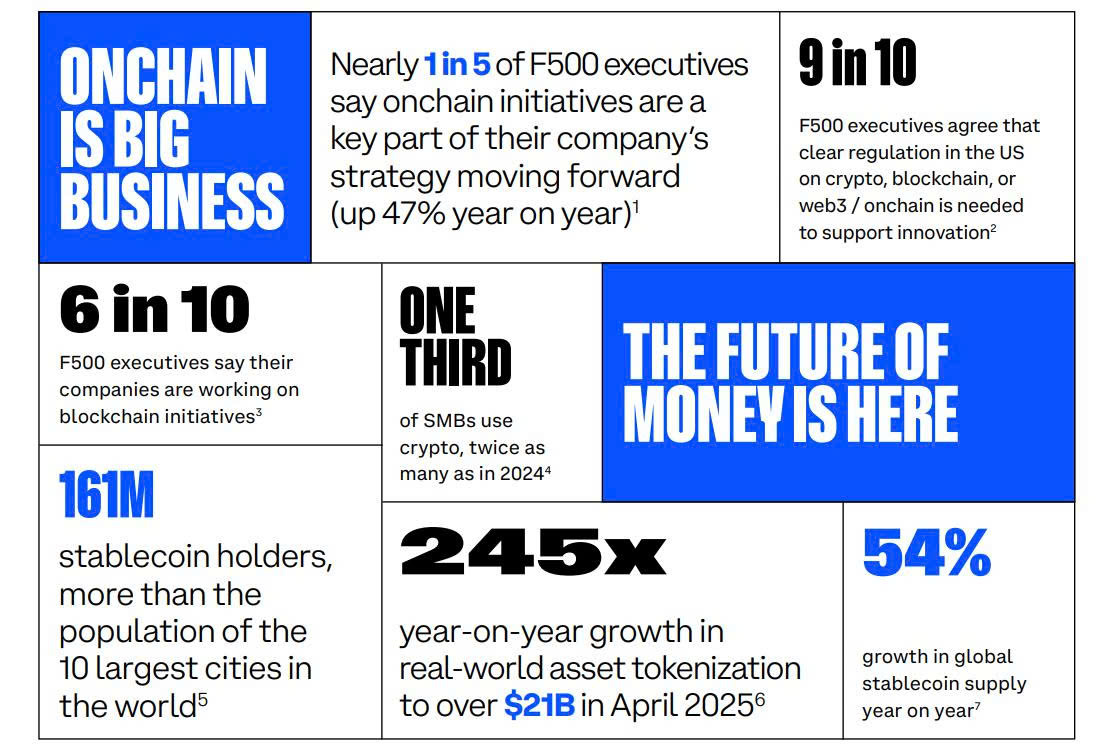
The scale of this activity is quantifiable. According to CoinGecko’s 2026 RWA Report, total RWA perpetual volume jumped to $524.8 billion in Q1 2026, significantly surpassing the $313.0 billion recorded for the entire year of 2025. This surge in volume reflects a maturing market where institutional players are actively trading tokenized real-world assets, treating them as core components of diversified portfolios rather than peripheral experiments.
Top platforms for tokenization
The infrastructure layer for RWA tokenization is consolidating around a handful of providers that can handle regulatory compliance and institutional-grade settlement. As the market moves from pilot programs to live capital flows, selecting the right platform depends on the specific asset class and the jurisdictional requirements of the investors.
The following comparison outlines the leading platforms based on their primary asset focus, compliance capabilities, and total value locked (TVL). These metrics reflect the current state of the market as institutions seek reliable rails for tokenized treasuries, private credit, and real estate.
| Platform | Primary Asset | Compliance Feature | TVL (USD) |
|---|---|---|---|
| Ondo Finance | US Treasuries | SEC Reg D/S | $1.2B |
| Centrifuge | Private Credit | KYC/AML On-chain | $350M |
| Securitize | Multi-Asset | Transfer Agents | $1.5B |
| RedStone | Oracle Infrastructure | Data Feeds | N/A |
| RealT | Real Estate | SEC Reg A+ | $12M |
Ondo Finance has established itself as a dominant player in the tokenized treasury space, offering access to US government debt through regulated vehicles. Its integration with major DeFi protocols allows for the seamless use of tokenized treasuries as collateral, driving significant total value locked. Securitize, backed by BlackRock’s BUIDL fund, provides the underlying infrastructure for many institutional issuers, leveraging its experience as a transfer agent to ensure strict compliance with securities laws.
For alternative assets, Centrifuge specializes in connecting real-world credit demand with DeFi liquidity. It enables businesses to tokenize invoices and real estate loans, providing a yield source for crypto investors while offering working capital to traditional businesses. RedStone offers a different layer of the stack, providing high-frequency, low-latency oracle data feeds that are critical for the accurate pricing of tokenized assets in lending and derivatives markets.
RealT focuses exclusively on fractionalized US real estate, allowing retail investors to purchase tokenized properties with low minimums. While its TVL is smaller compared to institutional platforms, it represents a significant segment of the consumer-facing tokenization market. The platform handles property management and distribution of rental yields directly to token holders, demonstrating the practical application of smart contracts in traditional property investment.
When evaluating these platforms, it is essential to look beyond TVL. Compliance infrastructure, such as automated KYC/AML checks and transfer restrictions, is often more valuable than raw capital volume. The most robust platforms are those that can manage the complex regulatory landscape while providing the liquidity and transparency that institutional investors require.
Regulatory clarity and standards
The regulatory landscape for RWA tokenization is shifting from experimental frameworks to established compliance protocols. In 2026, institutional adoption is no longer hindered by ambiguous legal definitions but by the need for interoperable standards across jurisdictions. The tokenization market has grown exponentially, with projections indicating a rise from $4.1 billion in 2025 to $5.19 billion in 2026 at a compound annual growth rate (CAGR) of 26.4% Research and Markets. This growth is underpinned by clearer guidelines from major financial regulators, which are reducing friction for institutional capital entry.
A critical component of this clarity is the standardization of asset types. Ethereum remains the backbone for approximately 75% of retail-focused property tokenization projects, supporting real estate-specific token standards like ERC-1400 and ERC-3643 (T-REX) Lofty AI. These standards ensure that tokenized assets meet legal requirements for ownership, transferability, and compliance, providing the legal certainty that traditional finance institutions require. Without such standards, the fragmentation seen in early crypto markets would persist, limiting scalability.
The Canton Network’s 2026 report highlights that the tokenized RWA market exceeded $36 billion (excluding stablecoins) as of late 2025 Canton Network. However, fragmentation across chains remains a challenge. Regulatory clarity is now focused on cross-border interoperability, ensuring that assets tokenized in one jurisdiction can be legally recognized and traded in another. This shift is reducing the compliance overhead for institutions, allowing them to scale tokenization efforts without rebuilding legal frameworks for every new asset class.
Market valuation projections to 2034
The current market trajectory suggests a rapid expansion of the RWA tokenization sector. According to CoinGecko’s 2026 report, total RWA perpetuals volume reached $524.8 billion in Q1 alone, surpassing the full-year volume of 2025. This surge indicates strong institutional adoption and liquidity inflows into tokenized instruments.
Looking ahead, long-term forecasts from major financial institutions paint a picture of exponential growth. McKinsey estimates the tokenized asset market could reach $2–4 trillion by 2030, while the Boston Consulting Group projects a $16 trillion valuation. Standard Chartered offers the most ambitious outlook, forecasting a $30 trillion market size by 2034.
These projections rely on the continued integration of traditional finance with blockchain infrastructure. As regulatory frameworks mature and interoperability improves, the transition of illiquid assets like real estate and private credit onto-chain is expected to accelerate, driving these valuations toward their projected ceilings.
Frequently asked questions on RWA tokenization
What is the tokenization report for 2026?
The 2026 tokenization landscape shows exponential growth, with market size projections rising from $4.1 billion in 2025 to $5.19 billion in 2026, reflecting a 26.4% compound annual growth rate. Research and Markets highlights this trajectory, while broader industry data from RWA.xyz indicates that tokenized real-world assets surpassed $24 billion in total value by February 2026, driven by a 266% growth spike in 2025.
Which crypto will be used to tokenize real estate?
Ethereum remains the dominant infrastructure, supporting approximately 75% of retail-focused property tokenization projects. Its network effects and security make it the preferred choice for issuers. The platform specifically supports compliance-oriented token standards such as ERC-1400 and ERC-3643 (T-REX), which are designed to handle the regulatory requirements of security tokens in real estate.
What is the projected valuation of the RWA tokenization market by 2034?
Long-term forecasts vary significantly based on institutional adoption rates. McKinsey estimates the tokenized asset market could reach $2–4 trillion by 2030, while the Boston Consulting Group projects a $16 trillion valuation. Standard Chartered offers the most ambitious forecast, suggesting the market could expand to $30 trillion by 2034, driven by the integration of traditional finance on-chain.
No comments yet. Be the first to share your thoughts!