
In early November 2025, the decentralized finance (DeFi) sector experienced one of its most severe stress events to date as the USDX stablecoin lost its peg, plunging from $1 to a staggering low of $0.3887 before settling at $0.0653 as of this writing. The root cause: a devastating exploit of the Balancer protocol that siphoned off approximately $128 million, unraveling liquidity pools and triggering a domino effect across interconnected DeFi platforms. This incident did not just expose vulnerabilities in USDX’s design but also laid bare the systemic liquidity risks lurking beneath the surface of algorithmic stablecoins and their supporting protocols.
How the Balancer Exploit Unraveled USDX’s Peg
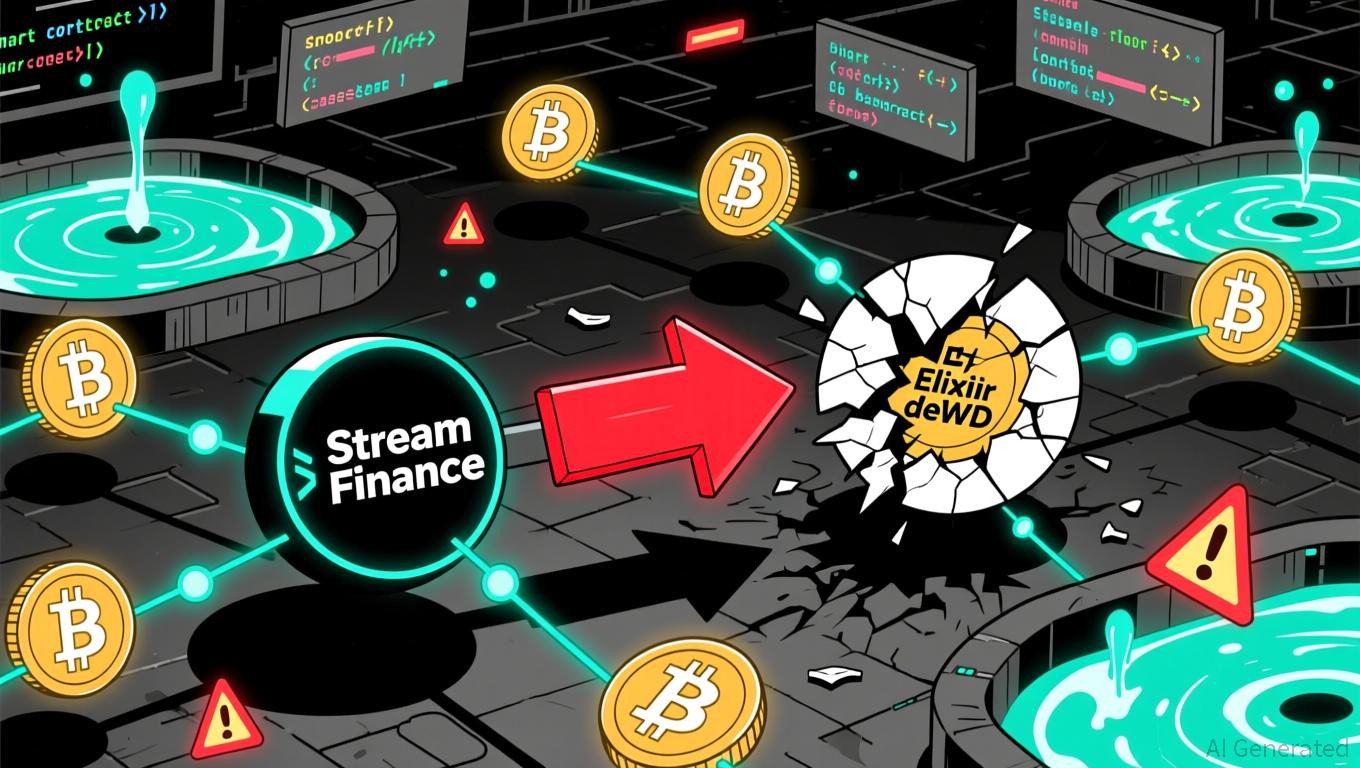
The Balancer exploit was not merely a technical mishap; it was a catalyst for a full-blown confidence crisis in synthetic stablecoins. Attackers exploited rounding errors in Balancer v2’s smart contracts, enabling unauthorized fund withdrawals that drained key liquidity pools - including those heavily weighted with USDX. As these pools emptied, market participants rushed to exit their positions, compounding sell pressure and causing borrowing costs on related DeFi lending platforms to soar above 800%.
This sudden evaporation of liquidity broke USDX’s delta-neutral hedging mechanism. Designed to maintain its peg through complex derivatives positions and cross-collateralized assets, the system faltered when collateral values crashed and liquidations cascaded through interconnected protocols. The result was an accelerated feedback loop: as confidence eroded, more users redeemed or dumped USDX, deepening its freefall.
Systemic Risks Exposed: DeFi’s Liquidity Fragility
The USDX depeg event is a stark reminder that DeFi’s composability is both its strength and Achilles’ heel. By relying on external protocols like Balancer for critical functions such as liquidity provision and collateral management, synthetic stablecoins inherit not just utility but also risk. When one component fails - as with the $128 million loss in Balancer - the shockwaves travel instantly across protocol boundaries.
USDX’s collapse underscores several systemic vulnerabilities:
- Poor collateral quality: Overexposure to illiquid or volatile assets amplified losses during liquidations.
- Lack of circuit breakers: No automated mechanisms existed to pause redemptions or stabilize prices during extreme volatility.
- Feedback loops: Mass liquidations led to further price declines, which triggered more liquidations in a vicious cycle.
This scenario is not unique to USDX; similar patterns have emerged in other synthetic stablecoins like xUSD and deUSD when exposed to cross-protocol shocks. For an in-depth exploration of how depegs cascade through interconnected protocols, see Stablecoin Depeg Cascades: How Protocol Interconnections Trigger Chain Reactions in DeFi.
USDX Stablecoin (USDX) Price Prediction 2026-2031
Forecast following the 2025 Balancer exploit and depeg crisis, considering potential recovery, regulatory responses, and DeFi sector evolution.
| Year | Minimum Price | Average Price | Maximum Price | Year-over-Year % Change (Avg) | Market Scenario Insights |
|---|---|---|---|---|---|
| 2026 | $0.030 | $0.085 | $0.200 | +30% | Volatility remains high as USDX rebuilds confidence. Possible relaunches and partial recapitalizations, but liquidity risks persist. |
| 2027 | $0.025 | $0.065 | $0.170 | -24% | Continued uncertainty as DeFi regulation tightens. Recovery efforts slow; trust issues linger. Possible legal actions or restructuring. |
| 2028 | $0.020 | $0.055 | $0.150 | -15% | Only modest gains; USDX faces strong competition from asset-backed and regulated stablecoins. Adoption limited outside niche DeFi protocols. |
| 2029 | $0.018 | $0.045 | $0.140 | -18% | Bearish cycle for algorithmic stables. Market consolidates around more secure alternatives. USDX struggles to regain peg or relevance. |
| 2030 | $0.015 | $0.038 | $0.120 | -16% | Regulatory clarity further sidelines synthetic stables. USDX survives in small DeFi circles but lacks mainstream restoration. |
| 2031 | $0.010 | $0.030 | $0.100 | -21% | USDX at risk of being phased out or replaced. Only speculative trading and legacy contracts maintain minimal liquidity. |
Price Prediction Summary
Following the severe depeg and Balancer exploit in late 2025, USDX faces a prolonged period of volatility and market skepticism. While minor recoveries and recapitalization attempts may occur, the stablecoin is unlikely to restore its $1 peg in the foreseeable future. Algorithmic and synthetic stablecoins, especially those with fragile collateral management, will face increasing regulatory and competitive pressures, limiting USDX's potential for a full-scale comeback.
Key Factors Affecting USDX Stablecoin Price
- Regulatory responses to stablecoin risks and DeFi exploits
- Ability to recapitalize and improve collateral mechanisms
- Market confidence in algorithmic stablecoins post-exploit
- Emergence of safer, asset-backed stablecoin alternatives
- Technological improvements in DeFi risk management
- Adoption and integration by major DeFi protocols
- Potential legal actions, restructuring, or wind-down scenarios
Disclaimer: Cryptocurrency price predictions are speculative and based on current market analysis. Actual prices may vary significantly due to market volatility, regulatory changes, and other factors. Always do your own research before making investment decisions.
The Confidence Crisis: What Happens When Stablecoins Aren’t Stable?
The psychological impact of watching USDX tumble from $1 to $0.0653 cannot be overstated. Stablecoins are foundational to DeFi - they serve as collateral for loans, trading pairs on DEXs, and safe havens during market volatility. When trust evaporates due to high-profile failures like this one, it reverberates through every layer of the ecosystem.
In response to this crisis, users scrambled for alternatives or rushed into fiat-backed stables perceived as safer harbors. Protocols dependent on synthetic stables faced forced unwinds or emergency governance interventions. As analysts noted during live coverage, “A single point of failure can rapidly escalate into systemic chaos when protocols are so deeply intertwined. ” For more context on recent cascading failures and protective strategies for DeFi users, refer to USDX and deUSD and the 2025 Stablecoin Depeg Cascade.
As the dust settles, USDX remains at $0.0653, a shadow of its intended $1 peg, highlighting the persistent aftershocks of the Balancer exploit. Liquidity providers and DeFi users are now grappling with not only direct losses but also a profound reassessment of risk assumptions that once underpinned DeFi’s rapid growth. The incident has prompted urgent questions: How resilient are synthetic stablecoins to protocol-level exploits? What does true decentralization mean when cascading failures can freeze portfolios for days and wipe out user funds in minutes?
Lessons for DeFi Risk Management
The USDX depeg crisis is forcing investors, developers, and protocol designers to revisit foundational principles of risk management in decentralized systems. Several key takeaways have emerged:
- Collateral Transparency: Protocols must disclose collateral composition and stress-test scenarios regularly, allowing users to gauge systemic exposure.
- Decentralized Insurance: The need for on-chain insurance solutions, covering both smart contract exploits and depeg events, is more urgent than ever. Products that offer real-time coverage could mitigate fallout from similar incidents.
- Automated Safeguards: Circuit breakers, dynamic redemption fees, and emergency governance actions should be standard features to prevent feedback loops during liquidity crises.
- Diversification: Relying on a single protocol or asset for collateral introduces concentration risk; diversified collateral baskets may help buffer against targeted attacks.
The broader ecosystem is already responding with proposals for enhanced auditing standards, cross-protocol risk dashboards, and collaborative incident response frameworks. For detailed analysis on how stablecoin depegs cascade through interconnected protocols, and steps users can take to protect their portfolios, see How Stablecoin Depegs Cascade Through DeFi Protocols.
Looking Ahead: Can Stablecoins Regain Trust?
The path forward will be challenging. With USDX still trading at $0.0653, confidence in algorithmic stablecoins has been deeply shaken. Market participants are demanding more rigorous collateral standards, transparent accounting practices, and robust contingency plans for protocol failures. Regulatory scrutiny is likely to intensify as well, with policymakers citing events like this as evidence of systemic risk within unregulated financial networks.
Yet innovation often emerges from crisis. New insurance primitives are being piloted to provide real-time coverage against exploits and depegs. Governance communities are debating the merits of hybrid collateral models that blend fiat-backed reserves with decentralized assets, aiming to balance stability with censorship resistance.
If DeFi is to mature into a resilient alternative financial system, it must internalize the lessons from November 2025: composability demands collective responsibility; transparency is non-negotiable; and robust insurance mechanisms are essential, not optional, for sustainable growth.




No comments yet. Be the first to share your thoughts!