DeFi scales: TVL growth and institutional maturity
By early 2026, the decentralized finance ecosystem has moved past its speculative infancy into a phase of measurable institutional integration. Total value locked (TVL) across DeFi protocols now sits between $130 billion and $140 billion, a figure that reflects a structural shift in how capital is allocated and managed on-chain. This growth is not merely a function of retail speculation but is driven by the integration of real-world assets and the maturation of lending markets.
The current landscape is defined by stability rather than volatile expansion. With off-chain interest rates expected to trend lower into 2026, on-chain borrow and lend rates are projected to remain low, even in a bull market environment. This dynamic creates a fertile ground for RWA tokenization, as the cost of capital decreases and the efficiency of on-chain credit becomes more competitive with traditional finance.
Total Value Locked (12-month trend)
The chart below illustrates the trajectory of Total Value Locked (TVL) across major DeFi protocols over the last 12 months. This provider-backed view highlights the steady accumulation of capital, signaling that 2026 is a year of consolidation and utility rather than experimental hype.
Real-world assets become backbone
In 2026, the DeFi ecosystem is shedding its speculative skin to embrace real-world asset (RWA) tokenization. This shift marks a structural transition from experimental gambling to institutional-grade infrastructure. As highlighted by the World Economic Forum, tokenization is no longer an emerging experiment but a mature mechanism for bridging traditional finance with on-chain liquidity. This convergence provides the stability that the broader market has long craved.
The core appeal lies in real yield. Unlike volatile protocol incentives, RWA-backed assets generate cash flow from tangible sources such as government bonds, private credit, and real estate. This allows DeFi protocols to offer consistent returns that correlate with global interest rates rather than crypto market cycles. For institutional investors, this transparency and yield predictability are the primary drivers for allocating capital to blockchain networks.
The integration of RWAs creates a deeper liquidity pool for the entire DeFi economy. Stablecoins and tokenized treasuries now serve as the foundational settlement layer, reducing reliance on volatile native tokens for collateral. This stability enables more complex financial instruments, such as automated yield strategies and decentralized lending, to operate with lower risk premiums. The result is a more robust financial system that can withstand market shocks without collapsing.
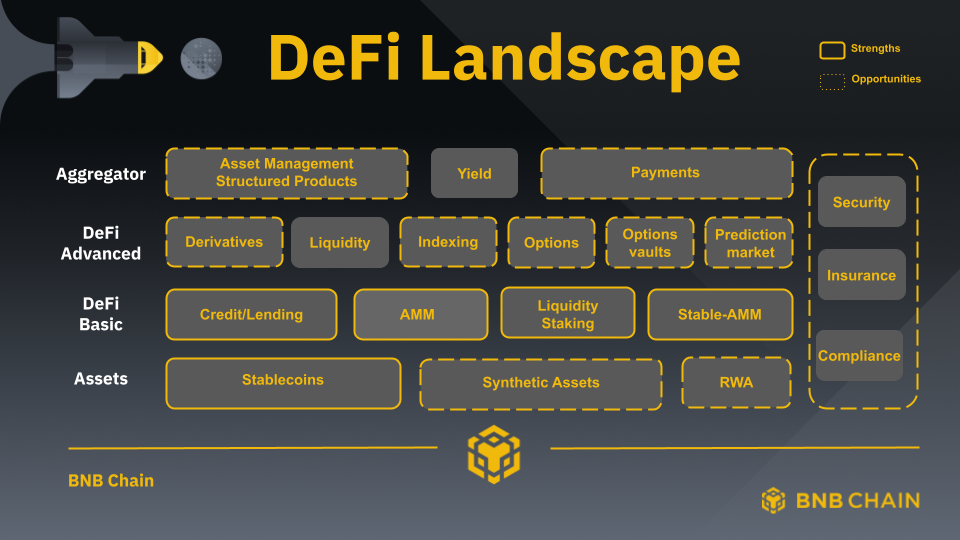
To understand the magnitude of this shift, it helps to compare traditional fixed-income yields with on-chain RWA yields. While traditional markets offer regulated, lower-yield stability, tokenized assets provide similar safety with the added benefits of 24/7 settlement and fractional ownership.
This comparison highlights why RWA tokenization is becoming the backbone of modern DeFi. It is not just about moving assets on-chain; it is about creating a more efficient, accessible, and stable financial layer that complements rather than competes with traditional markets.
AI-driven automation and yield
The shift from passive holding to active, AI-managed yield strategies marks a significant evolution in DeFi for 2026. Artificial intelligence agents are no longer just analytical tools; they are autonomous operators executing complex yield farming strategies across multiple protocols simultaneously. This automation allows for real-time rebalancing that manual traders simply cannot match, optimizing returns while navigating volatile market conditions.
These AI agents manage risk by continuously monitoring on-chain data, smart contract vulnerabilities, and liquidity depth. Instead of relying on static yield farms, intelligent systems dynamically shift capital to the most efficient opportunities, minimizing exposure to impermanent loss and protocol failures. This proactive risk management is essential in a landscape where smart contract exploits and market flashes can erase gains in seconds.
Liquidity provision has also been transformed. AI-driven bots provide continuous liquidity, adjusting price ranges and positions based on predicted volatility rather than fixed intervals. This results in tighter spreads and higher capital efficiency for liquidity providers. The result is a more resilient ecosystem where yield is generated through sophisticated, automated logic rather than simple speculation.
While the potential for higher returns is clear, the complexity of AI-driven DeFi requires careful due diligence. Understanding the underlying algorithms and risk parameters is crucial before allocating significant capital. As these tools become more sophisticated, they are setting a new standard for what is possible in decentralized finance.
Institutional infrastructure and rules
The transition of DeFi from speculative experimentation to structured finance hinges on two parallel developments: regulatory clarity and technical interoperability. In 2026, the barrier to entry for institutional capital is no longer just about yield; it is about compliance, custody, and the ability to move value across fragmented chains without losing liquidity or control.
Compliance is shifting from an afterthought to a foundational layer. Traditional financial institutions require on-chain identity verification and audit trails that match off-chain legal standards. This means smart contracts are increasingly bundled with identity protocols, allowing institutions to participate in DeFi while adhering to KYC/AML requirements. The result is a bifurcation of the ecosystem: permissioned pools for regulated capital and permissionless pools for retail speculation. This separation allows institutions to deploy capital into tokenized real-world assets (RWAs) with the same confidence they apply to traditional bond markets.
Cross-chain liquidity is the technical counterpart to this regulatory shift. Institutions cannot afford to have capital trapped in siloed ecosystems. New middleware protocols and liquidity aggregators are enabling seamless movement of assets across Ethereum, Layer 2s, and alternative L1s. This connectivity ensures that capital can flow to where the best risk-adjusted returns exist, regardless of the underlying blockchain. The focus is shifting from isolated chain dominance to a unified, multi-chain liquidity layer that supports institutional-grade settlement and reporting.
No comments yet. Be the first to share your thoughts!