RWA Tokenization Market Size and Growth Trajectory
The real-world asset (RWA) tokenization market has crossed the $30 billion threshold in 2026, marking a decisive shift from experimental pilot programs to institutional-grade deployment. According to data from RWA.xyz, the total value of tokenized assets excluding stablecoins reached approximately $24 billion by February 2026, with projections indicating the market exceeded $36 billion by late 2025. This growth represents a 266% increase year-over-year, driven largely by the inclusion of private credit, real estate, and government bonds on-chain.
Note: The chart above illustrates general market momentum. Specific RWA market cap data is fragmented across trackers like rwa.xyz, Canton Network, and Stobox, with mid-2026 estimates ranging between $31 billion and $36 billion.
Despite this rapid expansion, the market remains highly fragmented. Assets are spread across multiple blockchains, including Ethereum, Polygon, and specialized networks like Canton. This dispersion complicates liquidity aggregation and creates regulatory arbitrage opportunities. Institutional participants are increasingly demanding standardized protocols to bridge these silos, signaling that the next phase of growth will depend less on raw capital inflow and more on interoperability and compliance infrastructure.
Top platforms for tokenization
The market for real-world asset (RWA) tokenization has crossed $20 billion, driving a shift from experimental pilots to institutional-grade infrastructure. For funds and enterprises, selecting a platform is no longer just a technical decision; it is a compliance and liquidity strategy.
The leading providers distinguish themselves through specific regulatory alignments and asset class support. While some platforms cater to high-yield private credit accessible to retail investors, others build closed-loop ecosystems for institutional bond issuance. The choice depends on whether the priority is global reach under frameworks like MiCA or strict adherence to US SEC regulations.
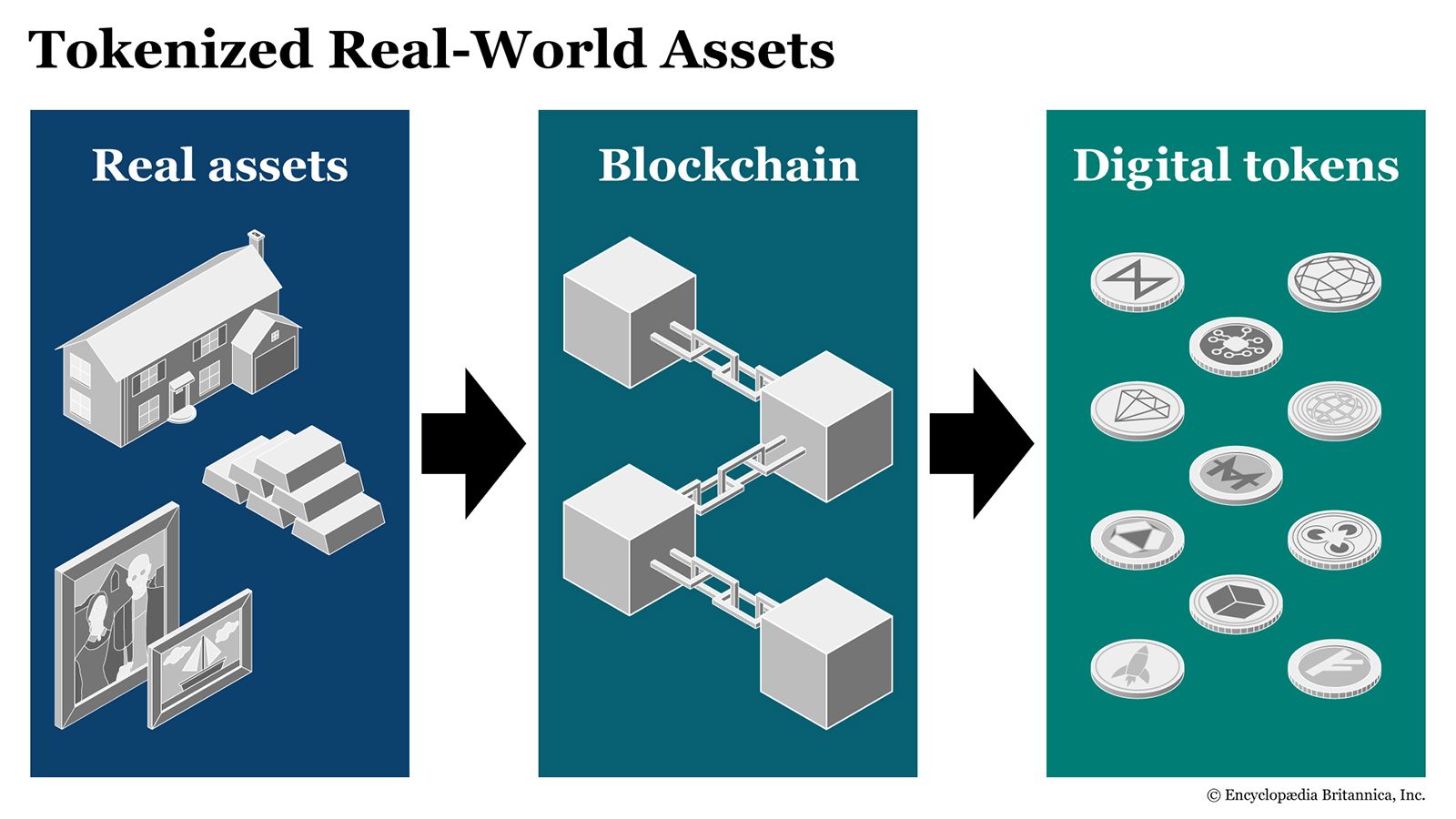
The table below compares the primary infrastructure providers shaping the 2026 landscape.
| Platform | Compliance Focus | Primary Assets | Target Audience |
|---|---|---|---|
| Securitize | SEC Reg D/S, MiCA | Bonds, Equity, Funds | Institutional |
| Centrifuge | MiCA, GDPR | Real Estate, Invoice | DeFi & Retail |
| Ondo Finance | SEC Reg S | US Treasuries | Institutional |
| Polymath | SEC, Global | Equity, Debt | Developers |
Regulatory landscape in 2026
The regulatory environment for RWA tokenization has shifted from experimental ambiguity to structured compliance. In 2026, the primary driver of market growth is no longer just technology, but legal clarity. Markets that previously struggled with classification issues are now seeing institutional adoption as regulators define clear paths for on-chain assets.
Europe leads this shift with the Markets in Crypto-Assets (MiCA) regulation. MiCA provides a unified framework that treats tokenized traditional assets with the same rigor as financial instruments. This clarity has encouraged European banks to launch tokenized bond and deposit products, knowing the legal boundaries are defined. The European Securities and Markets Authority (ESMA) continues to publish guidelines on how these assets must be audited and reported, reducing the "wild west" perception of crypto.
In the United States, the approach remains fragmented but is tightening. The Securities and Exchange Commission (SEC) has increasingly focused on enforcement actions against platforms that fail to register tokenized securities. However, recent guidance suggests a willingness to work with issuers who structure their offerings correctly. The Commodity Futures Trading Commission (CFTC) also plays a role, particularly for commodity-backed tokens. This dual-regulator environment creates complexity, but it also signals that regulators are taking RWA seriously enough to build specific oversight mechanisms.
A critical emerging issue is cross-chain interoperability. As RWA assets move between blockchains to access different liquidity pools, regulatory oversight becomes harder. If an asset originates on one chain with strict KYC rules but moves to a decentralized chain with no oversight, the legal wrapper can break. Regulators in both the EU and US are starting to require that the legal ownership records remain synchronized across all chains where the asset trades. This is a significant technical and legal hurdle for platform developers.
The market size reflects this maturation. As of late 2025, the tokenized RWA market (excluding stablecoins) exceeded $36 billion. By mid-2026, this figure is estimated to be between $31 and $36 billion, depending on the tracker. This growth is directly correlated with regions that have clearer regulatory frameworks. Markets without such clarity remain stagnant, unable to attract large-scale institutional capital due to compliance risks.
Asset classes driving adoption
The RWA market has expanded to $60 billion across more than 7,000 products in 2026, yet institutional adoption remains heavily concentrated in a single category. Tokenized Treasuries lead the sector, capturing $12.88 billion in market value as traditional finance firms seek yield in a digital format [[src-serp-2]][[src-serp-5]].
While real estate and private credit offer compelling long-term diversification, they face higher regulatory friction and liquidity constraints. Tokenized Treasuries benefit from standardized structures, clearer legal frameworks, and immediate integration with existing settlement systems [[src-serp-2]].
Other asset classes, such as commodities and intellectual property, remain in early experimental phases. Institutional investors prioritize assets with transparent pricing and established custodial solutions, which currently limits broader adoption beyond government debt [[src-serp-5]].
Liquidity and fragmentation challenges
The tokenized RWA market has grown past $36 billion, excluding stablecoins, yet this capital remains trapped in silos. Liquidity is the primary bottleneck for institutional adoption. Unlike public equities or major cryptocurrencies, RWA tokens rarely enjoy deep order books. Most trading occurs in thin, fragmented pools where large orders can significantly move prices.
Cross-chain fragmentation exacerbates this issue. Assets issued on Ethereum, Polygon, or private permissioned ledgers do not speak the same language. A tokenized bond on one chain cannot easily be used as collateral on another. This fragmentation forces participants to bridge assets, introducing technical risk and counterparty exposure. The result is a market where capital efficiency is artificially low.
Solving this requires more than better bridges. It demands standardized settlement layers and shared liquidity protocols. Without interoperability, the RWA market will remain a collection of isolated islands rather than a unified financial network. Until liquidity consolidates, the full potential of on-chain asset finance will remain out of reach.
No comments yet. Be the first to share your thoughts!