
In the high-stakes world of DeFi lending protocols, where billions flow through automated smart contracts, a single vulnerability can wipe out user funds overnight. As of November 30,2025, Nexus Mutual's NXM token trades at $73.65, down 0.85% over the last 24 hours with a high of $74.33 and low of $72.78. This stability amid ongoing threats underscores the growing maturity of DeFi insurance, yet lending exploits remain a top concern. Smart contract flaws accounted for 67% of DeFi losses in 2025, exceeding $3.1 billion overall, with $1.1 billion in the first half alone. Lending platforms, prized for their yield potential, are prime targets for reentrancy attacks, flash loans, and oracle manipulations that drain liquidity pools.
Providers of DeFi insurance lending exploits coverage offer a practical shield, allowing users to hedge positions without sacrificing returns. By pooling capital and leveraging community governance, these protocols enable quick claims and payouts, turning potential disasters into recoverable setbacks. For investors in protocols like Aave or Compound, securing smart contract coverage lending protocols isn't optional; it's essential capital preservation.
Lending Protocol Vulnerabilities That Demand Immediate Coverage
DeFi lending thrives on trust in code, but history shows that trust is often misplaced. August 2025 saw four major hacks totaling $65 million, hitting protocols like CrediX and others through classic exploits. Reentrancy lets attackers recursively withdraw funds before state updates, while flash loans amplify manipulations at zero net cost. Oracle feeds, if compromised, trigger liquidations at false prices, cascading losses across pools.
Even "safe" DeFi protocols face liquidity crises or smart contract bugs. Capital preservation comes first.
Insurance steps in here, covering these exact risks. Learn more in our guide on how smart contract exploit insurance works. With lending protocol hack protection 2025 now more accessible, users can deploy confidently, knowing recovery mechanisms exist.
Leading DeFi Insurance Protocols Tackling Lending Risks
The top five DeFi insurance protocols for smart contract coverage lending protocols stand out for their focus on exploits: Nexus Mutual, InsurAce, Unslashed Finance, Etherisc, and Relm Insurance. These leaders provide tailored policies, with Nexus Mutual's mutual model pooling member stakes for shared defense against failures in lending contracts.
Top 5 DeFi Insurance Protocols
- Nexus Mutual: Decentralized mutual providing coverage for smart contract exploits in lending protocols like Aave. NXM price: $73.65. Community-governed claims ensure fair payouts—secure your funds confidently!

- InsurAce: Multi-chain coverage (Ethereum, BSC, Polygon) for smart contracts, stablecoin de-pegs, and lending risks. Earn yields as a liquidity provider while protecting your assets.

- Unslashed Finance: Capital-efficient with instant liquidity and $90M+ in cover capital. Tokenized policies and decentralized arbitration ideal for lending protocol exploits.

- Etherisc: Pioneering parametric DeFi insurance for smart contract failures and hacks in lending platforms. Automated payouts reduce claim delays—build trust in your DeFi strategy.

- Relm Insurance: Tailored coverage for DeFi smart contract vulnerabilities and lending exploits. Addresses 2025 risks like reentrancy attacks for resilient portfolios.
Nexus Mutual excels in governance-driven claims, ideal for high-value lending positions. Its NXM at $73.65 reflects strong backing. InsurAce spans chains like Ethereum and Polygon, covering depegs alongside hacks for diversified lenders. Unslashed Finance brings instant liquidity and over $400 million in policies sold, using tokenized covers that trade seamlessly. Etherisc pioneers parametric triggers for automated payouts on verified exploits, minimizing disputes. Relm Insurance addresses underwriting gaps noted in NetDiligence 2025 reports, focusing on DeFi's evolving risks.
Compare these in depth via our 2025 rankings. Each protocol assesses lending-specific risks, pricing premiums dynamically based on audits and TVL.
Nexus Mutual (NXM) Price Prediction 2026-2030
Forecasts based on DeFi insurance growth amid rising smart contract exploits in lending protocols
| Year | Minimum Price | Average Price | Maximum Price | YoY % Change (Avg) |
|---|---|---|---|---|
| 2026 | $55.00 | $110.00 | $200.00 | +49% |
| 2027 | $90.00 | $170.00 | $350.00 | +55% |
| 2028 | $140.00 | $280.00 | $550.00 | +65% |
| 2029 | $220.00 | $450.00 | $850.00 | +61% |
| 2030 | $350.00 | $680.00 | $1,300.00 | +51% |
Price Prediction Summary
NXM is projected to experience substantial growth from its 2025 price of $73.65, driven by surging demand for DeFi insurance coverage amid over $3.1 billion in 2025 exploits. Average prices are expected to climb progressively to $680 by 2030, with maximums reaching $1,300 in bullish market cycles fueled by DeFi TVL expansion and Nexus Mutual's market leadership. Minimums reflect potential bearish corrections but trend upward overall.
Key Factors Affecting Nexus Mutual Price
- Rising DeFi exploits ($3.1B+ in 2025) increasing demand for smart contract coverage
- Nexus Mutual's position as the leading DeFi insurance mutual with community-governed claims
- Growth in DeFi TVL and lending protocol adoption boosting insurance premiums and NXM staking
- Regulatory clarity on crypto insurance and risk transfer mechanisms
- Technological innovations like parametric payouts enhancing protocol utility
- Competition from InsurAce, Unslashed Finance, and others pressuring but validating market
- Broader crypto market cycles, halvings, and institutional adoption influencing volatility
- Improvements in smart contract audits reducing but not eliminating exploit risks
Disclaimer: Cryptocurrency price predictions are speculative and based on current market analysis. Actual prices may vary significantly due to market volatility, regulatory changes, and other factors. Always do your own research before making investment decisions.
Selecting Coverage to Protect Your DeFi Lending Positions[/h2>
Choosing among DeFi exploit insurance providers starts with matching your exposure. For a $100,000 position in a lending protocol, evaluate coverage limits, premiums (often 1-5% annually), and payout speeds. Nexus Mutual requires staking NXM for voting power, fostering skin-in-the-game. InsurAce rewards liquidity providers with yields, blending insurance with passive income.
Unslashed's capital efficiency means less locked capital for providers, while Etherisc's flight delay-style parametrics suit oracle-dependent lending. Relm emphasizes regulatory clarity, appealing to institutions eyeing protect DeFi lending positions. Always verify protocol audits and historical claims; see lending exploit case studies.
These tools empower you to lend boldly, backed by proven safeguards.
Layering coverage starts simple: assess your lending exposure across protocols, then shop policies that match. Premiums hover around 2-4% for most lending covers, far cheaper than potential losses. With Nexus Mutual's NXM steady at $73.65, staking offers both insurance access and yield potential through governance rewards.
Step-by-Step: Securing Coverage for Your Lending Positions
Shield Your DeFi Lending: Buy Nexus Mutual or InsurAce Coverage in 5 Steps


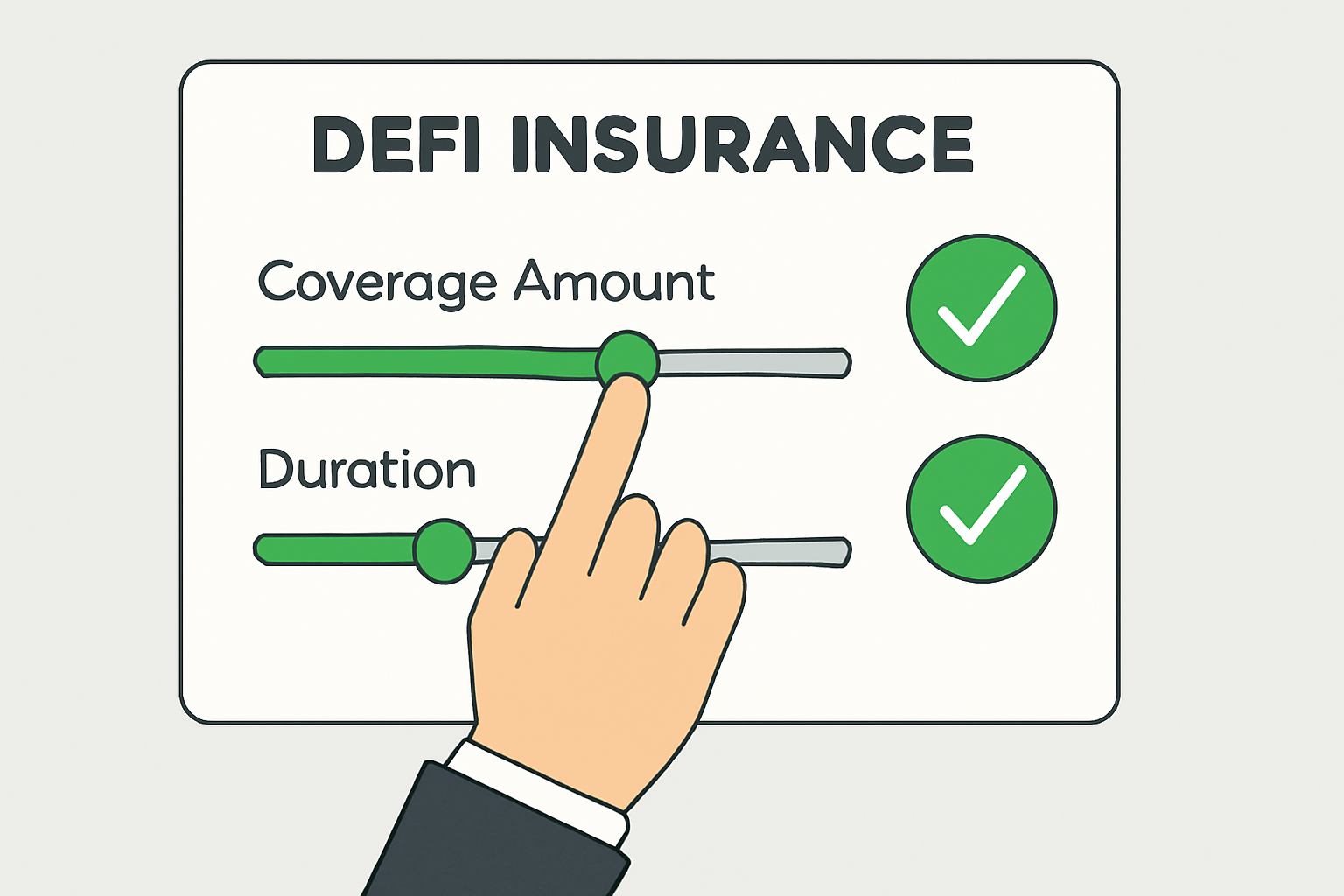
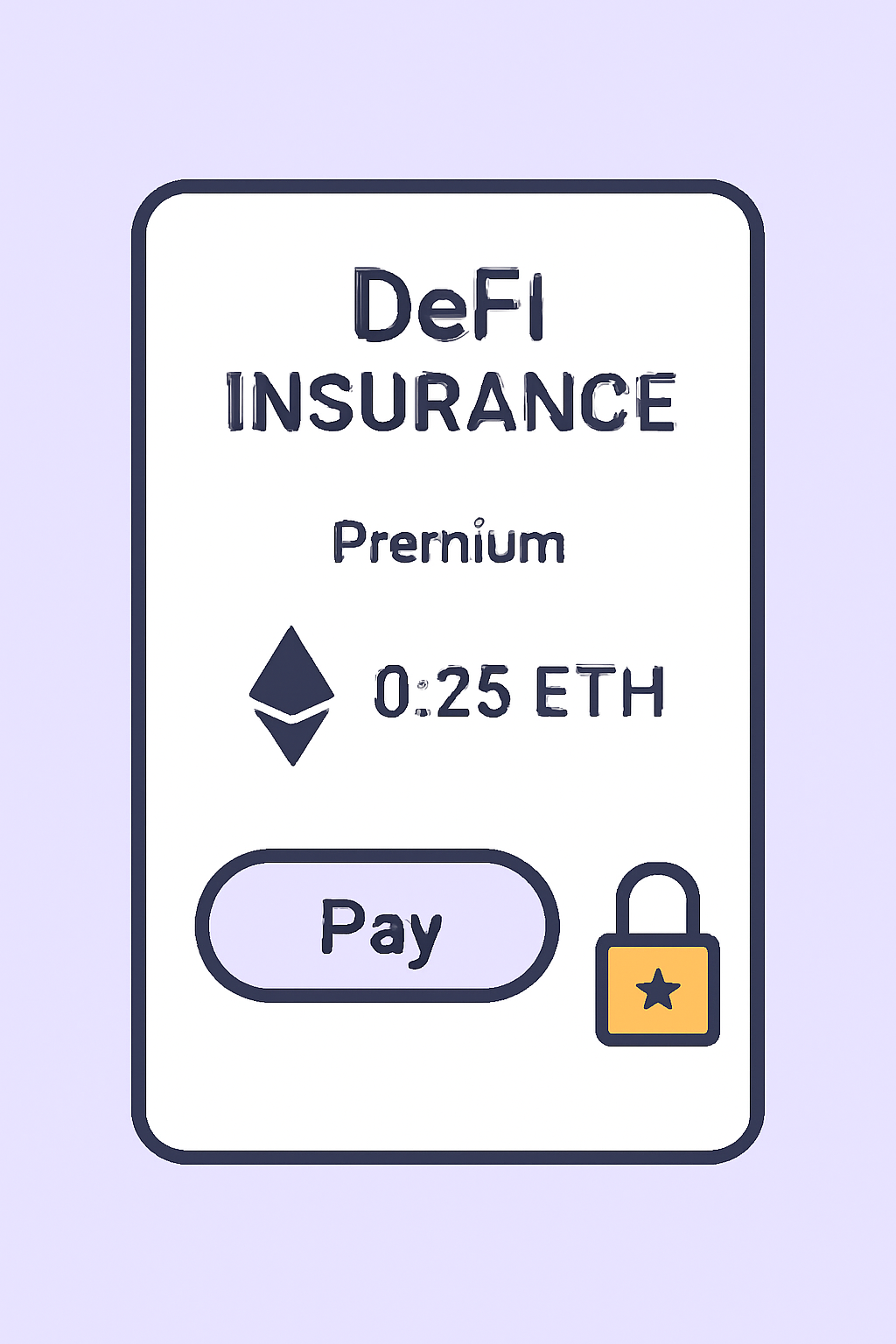

Once covered, monitor your policy via dashboards. Unslashed Finance shines for its tradeable tokens, letting you exit positions fluidly if risks shift. Etherisc automates via oracles, perfect for flash loan exposures in lending. Relm Insurance suits scaled operations, integrating custodial elements for hybrid protection.
This process demystifies protect DeFi lending positions, turning abstract risks into actionable steps. Providers like these have paid out millions, proving resilience even after 2025's $3.1 billion breach tally.
Comparing Top Protocols Side-by-Side
Comparison of Top DeFi Insurance Protocols for Lending Protocol Smart Contract Exploits 2025
| Protocol | Supported Chains | Coverage Types (Hacks/Depegs) | Avg Premium % | TVL | Payout Speed |
|---|---|---|---|---|---|
| Nexus Mutual | Ethereum, Polygon, Arbitrum, Optimism | Hacks, Depegs | 2.5% | $200M | 7-14 days 🟡 |
| InsurAce | Ethereum, BSC, Polygon, Avalanche | Hacks, Depegs | 1.9% | $75M | 3-5 days ⚡ |
| Unslashed Finance | Ethereum, Polygon, BSC | Hacks | 1.2% | $90M | Instant ⚡⚡⚡ |
| Etherisc | Ethereum, Gnosis Chain, Polygon | Hacks, Parametric | 2.0% | $45M | 1-2 days ⚡⚡ |
| Relm Insurance | Ethereum, Solana, Base | Hacks, Depegs | 2.8% | $55M | 5-10 days ⚡🟡 |
From the table, Unslashed edges on liquidity, while Etherisc leads parametrics for lending's oracle quirks. Nexus Mutual's community voting builds trust, with over $400 million in collective policies across the group. InsurAce multi-chain reach covers Polygon lending yields without friction. Relm tackles 2025's regulatory fog, vital as institutions pile in.
Pick based on your stack: heavy Ethereum lenders favor Nexus; cross-chain yield farmers lean InsurAce. All address DeFi insurance lending exploits head-on, with dynamic pricing reflecting audit quality and TVL.

Real-User Questions on Lending Exploit Coverage
These FAQs cut through noise, highlighting why lending protocol hack protection 2025 evolves fast. Parametric innovations from Etherisc trigger payouts on chain data alone, no committees needed. Unslashed's model slashes idle capital, boosting efficiency for providers.
DeFi lending rewards bold moves, but only with safeguards. Nexus Mutual at $73.65 anchors a maturing market, where $1.1 billion first-half losses spurred smarter hedging. Stack coverage across protocols for full-spectrum defense, blending Nexus governance with Relm's institutional polish. Yields compound safer, risks transfer seamlessly. Deploy in Aave or Compound today, insured tomorrow's exploits become footnotes.
Stay ahead: monitor TVL shifts and audit drops. These five protocols - Nexus Mutual, InsurAce, Unslashed Finance, Etherisc, Relm Insurance - form your core arsenal, fostering confidence in every borrow and lend.




No comments yet. Be the first to share your thoughts!