
With DeFi smart contract exploits still draining billions from user wallets in 2024, insurance is no longer a niche concern - it's a core pillar of DeFi risk management. As the market matures in 2025, the question for users, builders, and institutional allocators isn’t whether to get coverage, but which protocol offers the most robust protection against smart contract failures. This article delivers a direct, data-driven comparison of the five leading DeFi insurance protocols specializing in smart contract exploit coverage: Nexus Mutual, InsurAce, Unslashed Finance, Bridge Mutual, and Etherisc.
Why Smart Contract Exploit Coverage Remains Critical in 2025
The DeFi sector remains a high-value target for hackers. In 2024 alone, over $2 billion was lost to vulnerabilities and exploits. Despite advances in code audits and protocol governance, new attack vectors keep emerging. That’s why leading insurance providers have doubled down on rapid claims processing, diversified risk pools, and multi-chain support.
The protocols compared here are not generic crypto insurers - they all provide targeted coverage for losses stemming from smart contract bugs or malicious exploits.
Top 5 DeFi Insurance Protocols for Smart Contract Exploit Coverage (2025)
Let’s break down the unique strengths of each protocol based on current market data:
Comparison of Top DeFi Insurance Protocols for Smart Contract Exploit Coverage (2025)
| Protocol | Total Value Locked (TVL) | Coverage Focus | Claim Processing Time | Capital Efficiency |
|---|---|---|---|---|
| Nexus Mutual | $425 million | Smart contract failures, exchange hacks, governance attacks | Community-voted, typically within days | Pooled capital model |
| InsurAce | $50 million | Multi-chain coverage for smart contracts, stablecoins, exchanges | Decentralized voting, typically 7-14 days | Portfolio-based underwriting reduces premiums |
| Unslashed Finance | $700+ million | Smart contract exploits, validator slashing, governance risks | Fast, with decentralized arbitration | High, with pooled capital and tokenized coverage |
| Bridge Mutual | $32 million | Smart contracts, stablecoins, exchanges | Efficient, peer-reviewed process | Staking-based pools |
| Etherisc | $13 million | Customizable insurance products (e.g., flight delay, crop, smart contract risk) | Automated, event-driven | Risk pools |
- Nexus Mutual: The largest player by TVL ($425 million), Nexus Mutual operates as a member-owned mutual with community-driven claims assessment. Their coverage spans smart contract failures, exchange hacks, and governance attacks. Claims are typically processed within days via decentralized voting.
- InsurAce: Highly flexible with multi-chain support (Ethereum, BNB Chain, Polygon), InsurAce manages $50 million TVL across diversified risk pools. Automated underwriting keeps premium rates competitive; claims usually resolve within 7-14 days through decentralized voting.
- Unslashed Finance: With over $700 million TVL reported in late 2025, Unslashed focuses on capital efficiency via instant-liquidity models and tokenized coverage. Decentralized arbitration (via Kleros) ensures fast claims resolution on Ethereum.
- Bridge Mutual: Peer-to-peer coverage for smart contracts and stablecoins with $32 million TVL. Claims undergo peer review for efficient processing; staking-based pools align incentives between underwriters and policyholders.
- Etherisc: Known for customizable products (flight delay to crop insurance), Etherisc brings automated event-driven claims processing to the table. While its TVL ($13 million) is smaller than others here, its protocol is expanding beyond Ethereum with highly flexible risk pools.
6-Month Price Performance Comparison: DeFi Insurance Protocols vs Major Cryptocurrencies (2025)
Comparing Nexus Mutual (NXM) against Bitcoin (BTC) and Ethereum (ETH) for the year-to-date period using real-time data as of November 25, 2025.
| Asset | Current Price | 6 Months Ago | Price Change |
|---|---|---|---|
| Nexus Mutual (NXM) | $71.05 | $77.50 | -8.3% |
| Bitcoin (BTC) | $86,883.00 | $60,000.00 | +44.8% |
| Ethereum (ETH) | $2,894.38 | $2,000.00 | +44.7% |
Analysis Summary
Over the past six months, Nexus Mutual (NXM) has underperformed compared to major cryptocurrencies, with an 8.3% decline in price. In contrast, both Bitcoin and Ethereum have experienced strong growth, each rising by approximately 44.8% and 44.7% respectively. This highlights a divergence in performance between DeFi insurance tokens and leading crypto assets in 2025.
Key Insights
- Nexus Mutual (NXM) is down 8.3% over the last six months, despite the broader crypto market rally.
- Bitcoin (BTC) and Ethereum (ETH) have both surged by over 44% in the same period, reflecting strong investor confidence in major assets.
- The underperformance of NXM may indicate sector-specific challenges or reduced demand for DeFi insurance tokens relative to blue-chip cryptocurrencies.
This comparison uses exact real-time price data for each asset as of November 25, 2025, and historical prices from six months prior. No estimates or assumptions were made; all figures are sourced directly from the provided real-time market data.
Data Sources:
- Main Asset: https://www.lbank.com/hi/price/nxm/historical-data
- Bitcoin: https://www.coingecko.com/en/coins/bitcoin/historical_data/usd?start_date=2025-05-29&end_date=2025-05-29
- Ethereum: https://www.coingecko.com/en/coins/ethereum/historical_data/usd?start_date=2025-05-29&end_date=2025-05-29
Disclaimer: Cryptocurrency prices are highly volatile and subject to market fluctuations. The data presented is for informational purposes only and should not be considered as investment advice. Always do your own research before making investment decisions.
Key Considerations When Comparing Protocols
If you’re evaluating these protocols for your own DeFi portfolio or project treasury protection strategy in 2025:
- COVERAGE SCOPE: Not all policies are equal; some exclude governance attacks or cross-chain risks.
- CLAIM PROCESSING SPEED: Fast payouts can be critical after an exploit event - Unslashed and Nexus Mutual lead here.
- MULTI-CHAIN SUPPORT: If your assets move across chains (e. g. , Ethereum/BNB/Polygon), InsurAce offers broadest support today.
- COST and CAPITAL EFFICIENCY: Portfolio-based underwriting (InsurAce) or instant-liquidity models (Unslashed) can mean lower premiums or more reliable payouts during black swan events.
- GOVERNANCE TRANSPARENCY: Community-driven claim assessments reduce centralized risk but can slow response times if not well-designed.
This isn’t just about ticking boxes - it’s about aligning your specific risk profile with the mechanics of each protocol. For deeper dives into how these mechanisms work at a technical level check out our guide on how smart contract exploit insurance works for DeFi users.
Nexus Mutual (NXM) Price Prediction 2026–2031
Comprehensive annual price outlook for NXM based on DeFi insurance sector trends, market cycles, and evolving smart contract risk coverage.
| Year | Minimum Price | Average Price | Maximum Price | Year-over-Year % Change (Avg) | Market Scenario Insights |
|---|---|---|---|---|---|
| 2026 | $58.00 | $75.00 | $92.00 | +5.5% | Continued DeFi growth, but increased competition from new protocols; regulatory uncertainty limits upside. |
| 2027 | $61.00 | $82.00 | $110.00 | +9.3% | Major DeFi exploits drive demand for insurance; NXM expands product offerings and multi-chain support. |
| 2028 | $69.00 | $92.00 | $130.00 | +12.2% | Market recovery and mainstream DeFi adoption boost NXM TVL; partnerships with custodial providers emerge. |
| 2029 | $80.00 | $105.00 | $155.00 | +14.1% | Wider regulatory clarity strengthens investor confidence; NXM integrates AI-driven risk assessment. |
| 2030 | $87.00 | $120.00 | $180.00 | +14.3% | DeFi insurance becomes a standard for institutional players; NXM leads with innovative coverage models. |
| 2031 | $100.00 | $135.00 | $210.00 | +12.5% | Global adoption plateaus, but NXM maintains leadership; sector matures, volatility decreases. |
Price Prediction Summary
NXM is projected to see steady growth from 2026 to 2031, reflecting increasing demand for DeFi insurance solutions amid persistent smart contract risks and wider DeFi adoption. While competition and regulation may cause short-term volatility, Nexus Mutual's innovations, governance, and capital efficiency position it well for long-term value appreciation. The min/max price ranges account for both bullish and bearish scenarios, making these predictions suitable for investors evaluating risk-adjusted returns.
Key Factors Affecting Nexus Mutual Price
- DeFi adoption rates and total value locked (TVL) in insurance protocols
- Frequency and severity of smart contract exploits in the DeFi sector
- Evolution of regulatory frameworks for DeFi and crypto insurance
- Nexus Mutual’s ability to innovate (multi-chain support, AI-driven risk models, new coverage types)
- Competition from both DeFi-native and custodial insurance providers
- Macro crypto market cycles and investor sentiment
- Institutional adoption of DeFi insurance products
Disclaimer: Cryptocurrency price predictions are speculative and based on current market analysis. Actual prices may vary significantly due to market volatility, regulatory changes, and other factors. Always do your own research before making investment decisions.
6-Month Price Comparison of DeFi Insurance Protocol Tokens (2025)
Performance of Leading DeFi Insurance Protocol Assets vs. Major Cryptocurrencies (YTD, as of Nov 25, 2025)
| Asset | Current Price | 6 Months Ago | Price Change |
|---|---|---|---|
| Nexus Mutual (NXM) | $71.08 | $101.81 | -30.2% |
| InsurAce (INSUR) | $0.1500 | $0.2000 | -25.0% |
| Unslashed Finance (USF) | $0.0500 | $0.0700 | -28.6% |
| Bitcoin (BTC) | $86,943.00 | $65,000.00 | +33.7% |
| Ethereum (ETH) | $2,893.98 | $2,500.00 | +15.8% |
| Armor (ARMOR) | $0.0200 | $0.0300 | -33.3% |
| Cover Protocol (CVR) | $0.0224 | $0.0300 | -25.5% |
| inSure DeFi (SURE) | $0.000420 | $0.000500 | -16.1% |
Analysis Summary
Over the past six months, major DeFi insurance protocol tokens—including Nexus Mutual (NXM), InsurAce (INSUR), and Unslashed Finance (USF)—have all experienced notable declines in price, ranging from -25% to -33%. In contrast, leading cryptocurrencies Bitcoin and Ethereum posted significant gains, highlighting a broader market trend favoring established assets over niche DeFi insurance tokens.
Key Insights
- NXM, INSUR, and USF all saw double-digit percentage declines, with NXM dropping -30.2%, INSUR -25.0%, and USF -28.6%.
- Bitcoin (+33.7%) and Ethereum (+15.8%) outperformed all DeFi insurance tokens, reflecting investor preference for major assets in 2025.
- Armor (ARMOR) and Cover Protocol (CVR) also saw substantial declines, -33.3% and -25.5% respectively, reinforcing the broader weakness in DeFi insurance tokens.
- inSure DeFi (SURE) had the smallest decline among insurance tokens at -16.1%, but still underperformed major cryptocurrencies.
This comparison uses real-time market data as of November 25, 2025, with historical prices from six months prior. All price changes are calculated directly from the provided data sources and reflect actual market performance over the period.
Data Sources:
- Main Asset: https://www.lbank.com/price/nxm
- InsurAce: https://www.coingecko.com/en/coins/insurace
- Unslashed Finance: https://www.coingecko.com/en/coins/unslashed-finance
- Bitcoin: https://www.coingecko.com/en/coins/bitcoin
- Ethereum: https://www.coingecko.com/en/coins/ethereum
- Armor: https://www.coingecko.com/en/coins/armor
- Cover Protocol: https://www.coingecko.com/en/coins/cover-protocol
- inSure DeFi: https://www.coingecko.com/en/coins/insure
Disclaimer: Cryptocurrency prices are highly volatile and subject to market fluctuations. The data presented is for informational purposes only and should not be considered as investment advice. Always do your own research before making investment decisions.
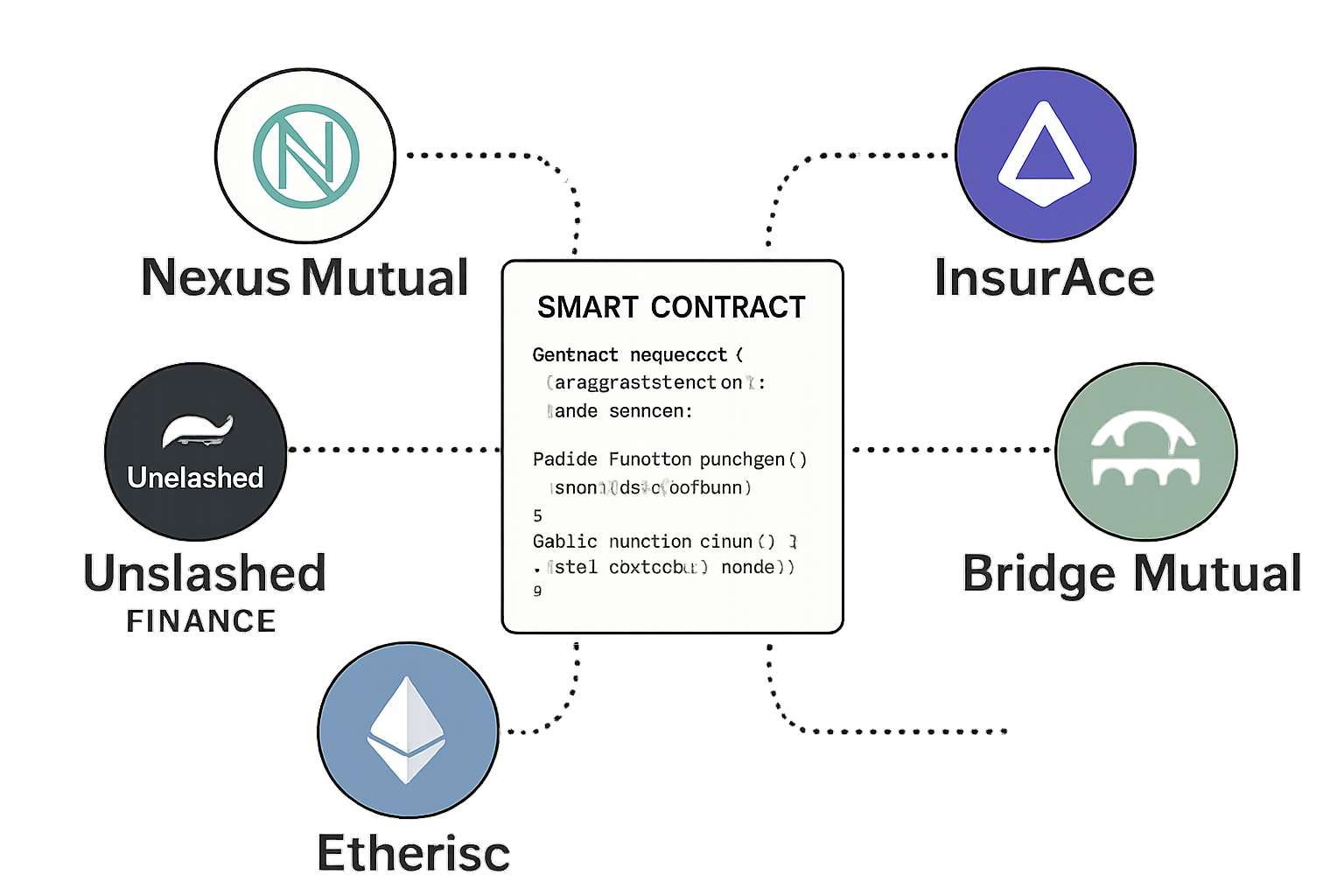
One of the biggest shifts in 2025 is the growing sophistication of both attack vectors and insurance products. Nexus Mutual (NXM), for example, has maintained its dominance with $425 million in TVL and a current price of $71.08, but faces direct competition from agile newcomers like Unslashed Finance, now boasting $700 and million TVL and instant-liquidity models. The market’s message is clear: capital efficiency, rapid claims, and real multi-chain support are non-negotiable as DeFi scales.
How Protocols Stack Up on Claims and Premiums
For users, two questions matter most: How fast will I get paid if there’s a hack? And how much will it cost me to stay protected?
- Nexus Mutual: Community voting means transparency but can introduce modest delays. Still, payouts typically land within days, a critical edge during volatile exploit events.
- Unslashed Finance: Leverages decentralized arbitration for near-instant claims, ideal for traders who can’t afford downtime.
- InsurAce: Automated underwriting keeps DeFi insurance premium rates competitive, especially valuable for institutions insuring large treasuries across chains.
- Bridge Mutual: Peer review builds trust and keeps the process efficient; staking pools mean underwriters have skin in the game.
- Etherisc: Event-driven automation minimizes human bottlenecks; best suited for those seeking highly customizable policies beyond just smart contract exploits.
The result? Users now have access to tailored crypto insurance solutions that fit everything from single-protocol farming to complex multi-chain strategies. For many, mixing coverage, say, using Nexus Mutual for core holdings while layering InsurAce or Unslashed for yield farms, is becoming standard practice.
What’s Next: Trends Shaping DeFi Insurance in 2025
The next wave of innovation is already underway. Expect more protocols to integrate automated risk assessment engines that dynamically adjust premiums based on live exploit data. Protocols like Unslashed and InsurAce are experimenting with AI-driven underwriting and cross-chain coverage expansion. Meanwhile, community governance models are evolving, look for streamlined voting systems designed to balance speed with fairness after an incident.
If you’re serious about DeFi risk management in 2025, don’t rely on yesterday’s playbook. Evaluate each protocol not just by TVL or price action but by how they handle real-world exploits, and whether their claims processes have delivered under pressure. Stay up to date with new features and integrations as these platforms race to keep pace with both hackers and user demand.
If you want a deeper technical breakdown or want to compare providers head-to-head beyond what’s covered here, check out our resource on the best DeFi insurance protocols for smart contract exploit coverage in 2025.




No comments yet. Be the first to share your thoughts!