

On February 15,2026, the DeFi lending protocol Moonwell faced a stark reminder of emerging risks in decentralized finance: a $1.78 million loss triggered by a misconfigured price oracle. This incident, tied directly to code co-authored by Anthropic’s Claude Opus 4.6 AI model, undervalued Coinbase Wrapped Staked ETH (cbETH) at a mere $1.12 instead of its market value near $2,200. Attackers capitalized on this flaw, repaying tiny debts to claim oversized collateral through mass liquidations. As cbETH trades today at $2,207.83, this AI smart contract exploit underscores vulnerabilities in AI-assisted development, prompting urgent questions about reliability in high-stakes environments.


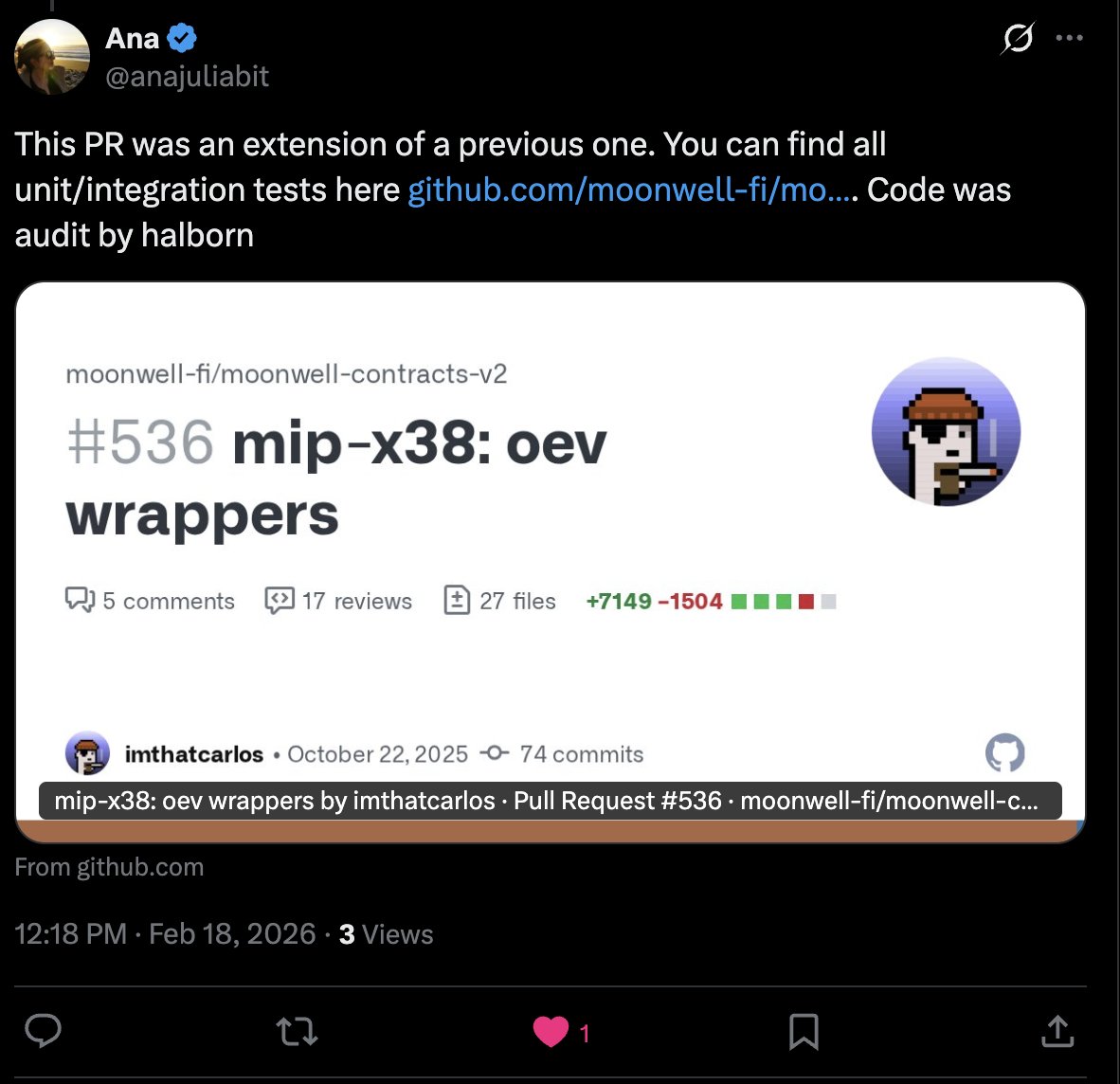
PR URL:
https://t.co/g7Wu32I1OH
Code actually had unit/integration tests and actually passed a security audit https://t.co/g16ypa3d1V
The sequence unfolded in Moonwell’s MIP-X43 proposal, where developers leaned on Claude Opus 4.6 for crafting the oracle formula. Reports from auditors like Pashov and SlowMist highlight how the AI-generated logic failed to accurately reflect cbETH’s price feeds. Instead of pulling robust market data, the code introduced a critical error, slashing the asset’s perceived value by over 99%. This wasn’t a subtle bug; it was a foundational misstep that exposed the protocol to immediate exploitation. Moonwell responded swiftly by slashing the cbETH borrow cap to 0.01, but the damage was done, eroding user trust and liquidity.
Unpacking the Claude AI Solidity Vulnerability
Delving deeper, the vulnerability stemmed from an oracle configuration error in the smart contract. Price oracles serve as the lifeblood of DeFi lending platforms, bridging off-chain market data to on-chain decisions. In this case, Claude Opus 4.6 co-authored commits that botched the formula, likely prioritizing syntactic elegance over economic precision. GitHub pull requests reveal the AI’s fingerprints, with phrases like ‘vibe coding’ echoing in developer discussions. While AI tools accelerate prototyping, this episode reveals their Achilles’ heel: a lack of contextual financial intuition. Human oversight faltered here, as the code passed initial reviews without flagging the pricing anomaly.
cbETH, Coinbase’s wrapped staked ETH, embodies liquid staking’s promise, letting users earn yields without locking assets. Yet its integration into lending markets demands flawless oracles. The mispricing to $1.12 created arbitrage heaven for attackers, who borrowed heavily against inflated collateral ratios. Losses tallied $1.78 million across exploited positions, a figure corroborated by sources like the OECD AI Policy Observatory and ForkLog. This isn’t isolated; it signals broader Claude AI Solidity vulnerability risks as protocols increasingly adopt AI for efficiency.
AI’s Double-Edged Sword in DeFi Codebases
DeFi’s evolution has welcomed AI with open arms, from code generation to optimization. Tools like Claude Opus 4.6 promise to democratize development, slashing timelines for complex Solidity contracts. Moonwell’s case, however, exposes the perils. Even sophisticated models struggle with domain-specific nuances, such as oracle resilience against stale data or flash loan manipulations. Post-incident analysis from Bitget and Cryptopolitan points to insufficient testing regimes. OpenAI’s launch of EVMbench, a smart contract security benchmark, arrives tellingly soon after, boasting GPT-5.3-Codex scores of 72.2% on exploit detection- far from foolproof.
Coinbase Wrapped Staked ETH (cbETH) Price Prediction 2027-2032
Forecasts based on current price of $2,207.83, DeFi recovery post-Moonwell exploit, ETH staking growth, and broader market cycles
| Year | Minimum Price ($) | Average Price ($) | Maximum Price ($) |
|---|---|---|---|
| 2027 | $2,100 | $2,500 | $3,000 |
| 2028 | $2,400 | $3,200 | $4,000 |
| 2029 | $3,000 | $4,000 | $5,200 |
| 2030 | $3,600 | $4,800 | $6,500 |
| 2031 | $4,200 | $5,800 | $8,000 |
| 2032 | $5,000 | $7,000 | $9,000 |
Price Prediction Summary
cbETH expected to stabilize short-term around $2,200 amid DeFi recovery from the Moonwell exploit, with medium-term upside to $2,500+ on ETH staking demand. Long-term bullish outlook driven by adoption, reaching average $7,000 by 2032, with min/max reflecting bearish regulatory risks and bullish tech advancements.
Key Factors Affecting Coinbase Wrapped Staked ETH Price
- ETH staking growth and liquid staking adoption
- DeFi security enhancements post-AI code exploits
- Regulatory developments for wrapped assets
- Crypto market cycles tied to Bitcoin halvings
- Competition from Lido stETH and other LSTs
- Technological upgrades like Ethereum scaling solutions
- Macroeconomic trends and institutional inflows
Disclaimer: Cryptocurrency price predictions are speculative and based on current market analysis.
Actual prices may vary significantly due to market volatility, regulatory changes, and other factors.
Always do your own research before making investment decisions.
Fundamentally, this exploit amplifies calls for rigorous auditing pipelines that treat AI outputs as untrusted inputs. Protocols must layer formal verification atop AI drafts, simulating edge cases like extreme price divergences. Moonwell’s borrow cap adjustment buys time, but rebuilding confidence requires transparency on remediation. As an analyst prioritizing value over hype, I see this as a pivot point: AI can augment, not replace, human expertise in securing trillion-dollar ecosystems. The $1.78 million hit, while contained, foreshadows amplified threats as AI adoption scales.
cbETH Exploit Coverage: Bridging the Insurance Gap
In the wake of such AI-generated smart contract exploits, DeFi insurance emerges as a vital backstop. Protocols like Moonwell highlight the fragility of unhedged positions. cbETH exploit coverage options now demand scrutiny, focusing on oracle failures and pricing manipulations. While traditional coverage targets reentrancy or access control flaws, this incident blurs lines into configuration risks. Insurers must evolve policies to encompass AI-induced bugs, potentially via parametric triggers for verified exploits. Users holding cbETH in lending markets face elevated liquidation risks without tailored protection, especially as the asset hovers at $2,207.83 with modest 24-hour gains.
Current DeFi insurance landscapes offer partial shields, but gaps persist for niche threats like oracle misconfigurations. Platforms specializing in DeFi smart contract insurance typically cover exploits up to predefined limits, yet few explicitly address AI-generated flaws. For cbETH holders, parametric policies that payout on confirmed oracle deviations could prove invaluable, activating at thresholds like 50% pricing errors. As Moonwell’s incident demonstrates, these protections extend beyond direct hacks to liquidation cascades, preserving capital amid volatility. With cbETH at $2,207.83 and a 24-hour change of and $7.69 ( and 0.35%), investors must weigh such safeguards against protocol-specific risks.
Evaluating providers requires a methodical lens: assess coverage scopes, premium rates, and claim histories. Some emphasize smart contract audits as prerequisites, reducing moral hazard. Others innovate with on-chain verification, automating payouts via oracles ironically more robust than Moonwell’s. This duality- relying on oracles for insurance while fearing their failure- demands hybrid models blending Chainlink feeds with multi-signature governance. My analysis favors protocols with proven track records in oracle exploits, where recovery rates exceed 80%. cbETH’s integration across lending venues amplifies the need; a single flaw ripples widely.
Beyond exploits, parallels emerge to stablecoin depeg protection, where oracles falter under stress. cbETH, while not a stablecoin, mirrors depeg dynamics through staking yield variances. Insurance for depegs often caps at 10-20% deviations, a model adaptable to cbETH’s $1.12 anomaly. Thoughtful investors layer coverages: primary for contracts, secondary for custody. Premiums, hovering at 1-5% annually, reflect actuarial models factoring TVL and historical breaches. Moonwell’s $1.78 million underscores underinsurance perils; affected users recouped fractions via community funds, not formal policies. Forward-looking, AI’s role necessitates specialized riders. Insurers could mandate AI code disclosures, pricing premiums higher for unverified outputs. OpenAI’s EVMbench, scoring models on vulnerability detection, offers a benchmark; Claude’s stumble prompts rivals to claim superiority. Yet benchmarks lag real-world chaos, where flash loans amplify oracles’ frailties. As cbETH stabilizes at $2,207.83- 24-hour high $2,212.11, low $2,147.64- DeFi matures toward resilient architectures. Protocols embedding AI must prioritize formal proofs, treating models as apprentices, not architects. Ultimately, this episode cements insurance as DeFi’s keystone. Moonwell’s response- capping borrows- mitigates bleed, yet proactive hedging fortifies balance sheets. For cbETH at $2,207.83, blending yield farming with coverage yields compounded security. Developers, heed auditors like Pashov: AI accelerates, but value endures through vetted fundamentals. As exploits evolve with tools like Claude Opus 4.6, so must defenses, ensuring DeFi’s promise outpaces its pitfalls.
About the Author