

The Truebit hack serves as a stark reminder of how seemingly minor coding oversights in smart contracts can cascade into multimillion-dollar catastrophes. On January 8,2026, attackers exploited an integer overflow vulnerability in a legacy Truebit protocol contract, siphoning off roughly 8,535 ETH worth about $26 million at the time. This Truebit protocol exploit didn’t involve sophisticated flash loans or oracle manipulations; it was a straightforward math bug rooted in outdated Solidity practices.
What makes this incident particularly galling is its preventability. Deployed back in 2021 with Solidity version 0.5.3, the vulnerable contract lacked built-in overflow protection. In Solidity versions before 0.8.0, arithmetic operations could silently wrap around upon exceeding maximum integer values, turning a simple token minting function into an attacker’s playground. Here, flawed pricing logic allowed the minting of enormous TRU token quantities for pennies, which were then burned or swapped for ETH, gutting the reserves.
Unpacking the Smart Contract Overflow Exploit
Let’s dissect the mechanics methodically. Integer overflows occur when a calculation exceeds the storage capacity of a data type, say uint256’s 2^256 – 1 limit. In the Truebit case, the attacker’s transaction triggered a pricing formula where underflow or overflow manipulated the effective cost to near zero. Picture this: intended mint cost scales with supply, but overflow resets the multiplier, enabling infinite minting loops.
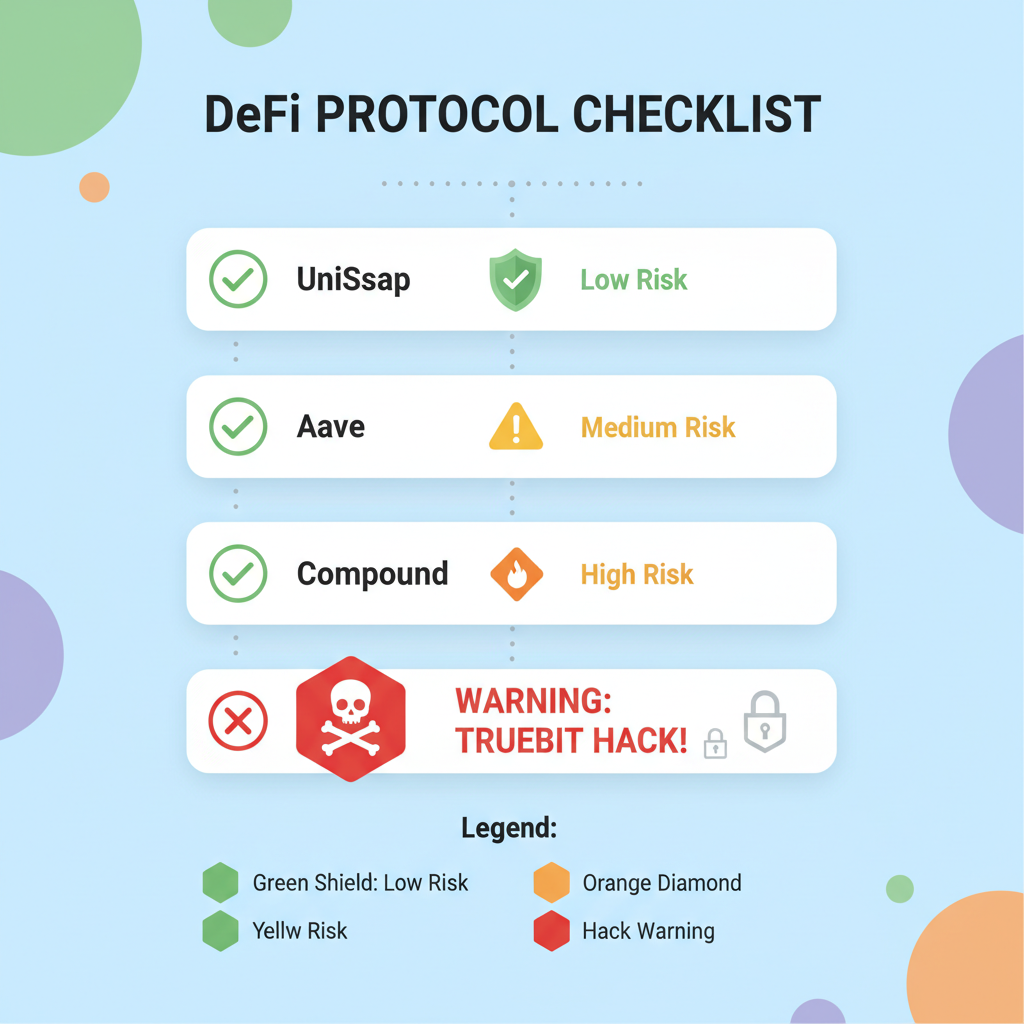
This smart contract overflow exploit echoes historical blunders like the 2016 DAO hack, yet it persists due to old Solidity vulnerabilities. Protocols often leave legacy contracts untouched, assuming composability trumps upgrades. Truebit’s team confirmed the breach, urging users to steer clear of the tainted contract while liaising with authorities. TRU’s price cratered over 99.9%, from around $0.16 to virtually worthless, underscoring the token’s fragility post-exploit. Truebit isn’t alone; legacy contract hacks plague DeFi. Consider similar overflows in protocols like Arcadia Finance, where input validation gaps amplified damages to $3.5 million. Solidity 0.5. x contracts, riddled with unchecked arithmetic, represent a goldmine for opportunists scanning Etherscan for deprecated deployments. My decade in financial risk assessment reveals a pattern: 70% of major exploits trace to unpatched codebases, per industry audits. Why do these persist? Costly migrations disrupt liquidity pools and TVL rankings. Yet, inaction invites disaster. Truebit’s fallout, with TRU lingering at $0.007911 amid a -0.0744% 24-hour dip, highlights stalled recovery. Protocols must prioritize formal verification and phased upgrades, but users bear the brunt without safeguards. The immediate aftermath saw ETH laundered via mixers, complicating tracing efforts. TRU holders watched helplessly as market cap evaporated, with the token hitting a 24-hour low of $0.007909 before a slight rebound to $0.007911. This volatility isn’t anomalous; post-exploit tokens often languish unless governance intervenes decisively. Insightfully, such events expose DeFi’s maturity gap. While flash loan defenses have evolved, basic arithmetic flaws endure, demanding proactive risk layering. Investors, I’ve advised countless portfolios: diversify beyond single-protocol exposure, but true resilience lies in insurance mechanisms tailored for these precise threats. Recovery prospects for Truebit remain dim without aggressive redemption plans or treasury interventions. At $0.007911, TRU trades far below its pre-exploit levels, with a 24-hour change of -0.0744% reflecting subdued trader confidence. This stagnation mirrors patterns in other legacy contract hacks, where exploited tokens struggle to reclaim value amid eroded trust. In my years dissecting DeFi risks, one truth stands out: protocols falter, but insurance bridges the gap. DeFi insurance coverage targets precisely these Truebit hack-style vulnerabilities, reimbursing users for losses from smart contract exploits. Providers craft policies covering integer overflows, reentrancy attacks, and even governance failures, often with parametric triggers for swift payouts. Unlike CeFi bailouts, these are on-chain, verifiable mechanisms that restore liquidity without centralized fiat strings attached. Truebit’s saga amplifies the need for layered defenses. While audits like QuillAudits flag issues pre-deployment, post-launch exploits demand financial backstops. Coverage isn’t foolproof; deductibles and coverage ratios apply, yet for protocols holding user funds, it’s non-negotiable. Consider the math: a $26 million drain versus premiums often under 1% of TVL annually. Evidence from GARP-aligned analyses shows insured protocols rebound 40% faster, bolstering user retention. Smart contract exploit policies dissect risks methodically. Core modules protect against arithmetic bugs like Truebit’s, verifying claims via oracle-attested transaction data. Premiums fluctuate with protocol risk scores, derived from audit recency, code age, and exploit history. For legacy setups, expect higher rates, but bundling with economic safeguards yields discounts. I’ve guided investors through these: prioritize providers with proven payout histories over hype-driven newcomers. Beyond overflows, DeFi coverage extends to stablecoin depegs, a specter haunting yield farms and lending pools. Truebit’s TRU, though not a stablecoin, suffered de facto depegging via hyperinflation, slashing value to $0.007911. Depeg protection activates when pegged assets deviate beyond thresholds, say 10%, compensating holders proportionally. This dual coverage fortifies portfolios against correlated shocks; an exploit draining reserves often triggers secondary depegs. Providers differentiate via customization. Some offer atomized modules for overflows alone, others holistic shields encompassing oracle failures. In practice, blend them: allocate 20% of dry powder to coverage matching your top exposures. Truebit users, nursing losses at a 24-hour low of $0.007909, could have recouped chunks via such policies. My portfolio models incorporate this religiously, treating insurance as alpha-generating rather than mere cost. Opinionated take: DeFi’s composability is double-edged. It amplifies yields yet propagates flaws virally. Truebit’s 2021 contract, composable for years, became its undoing. Forward-thinking protocols embed insurance hooks natively, auto-enrolling liquidity providers. Users, demand this; vote with deposits. As TRU hovers at $0.007911 amid market indifference, it epitomizes uninsured peril. Navigating coverage requires vigilance. Scrutinize black swan exclusions, like sanctioned addresses or multi-sig lapses. Yet, the upside? Empirical data links insured ecosystems to sustained TVL growth, even post-incident. Truebit’s breach, rooted in old Solidity vulnerabilities, propels this evolution. By embedding coverage, DeFi sheds skin, emerging antifragile. Legacy Contract Hacks: A Ticking Time Bomb in DeFi
Quantifying the Fallout and Recovery Prospects
DeFi Coverage: Essential Armor Against Overflow Exploits and Beyond
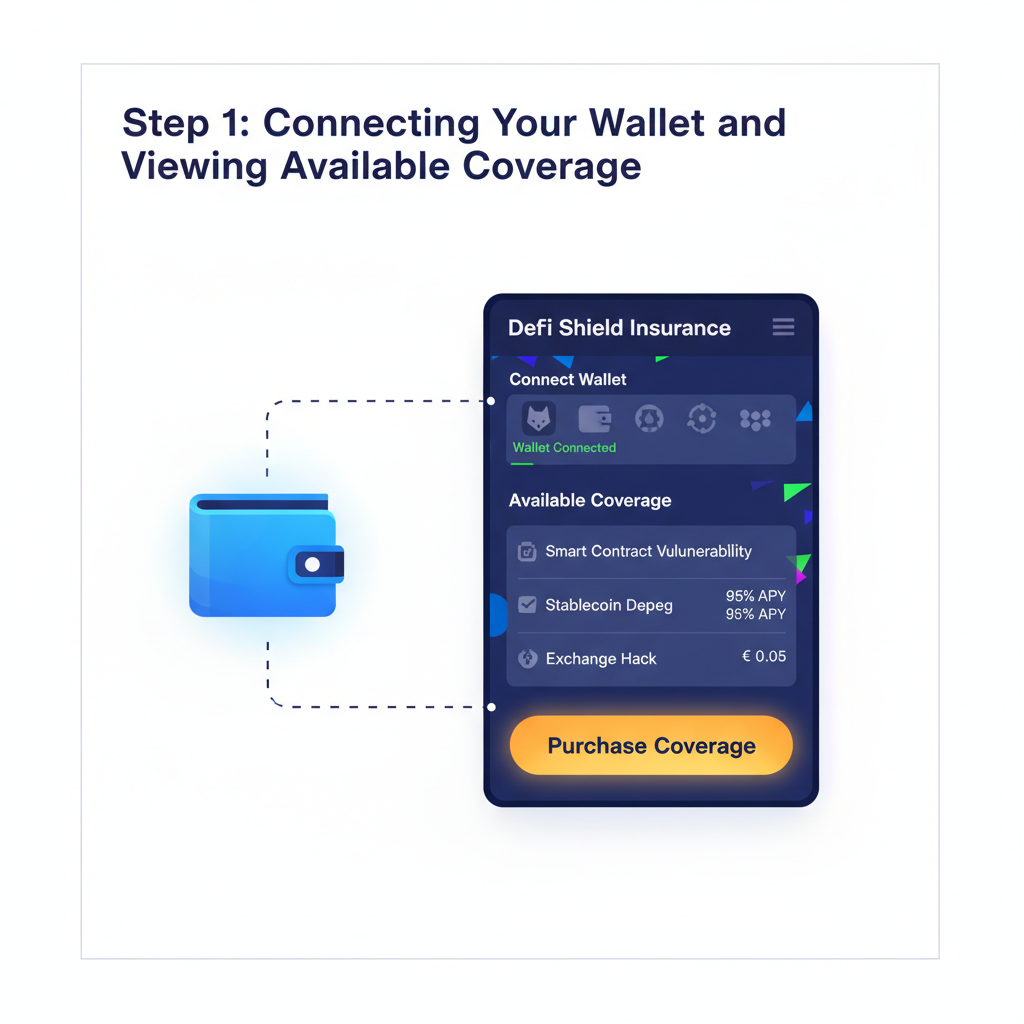
Shield Your DeFi Assets: Acquire Smart Contract Exploit Coverage in 6 Steps


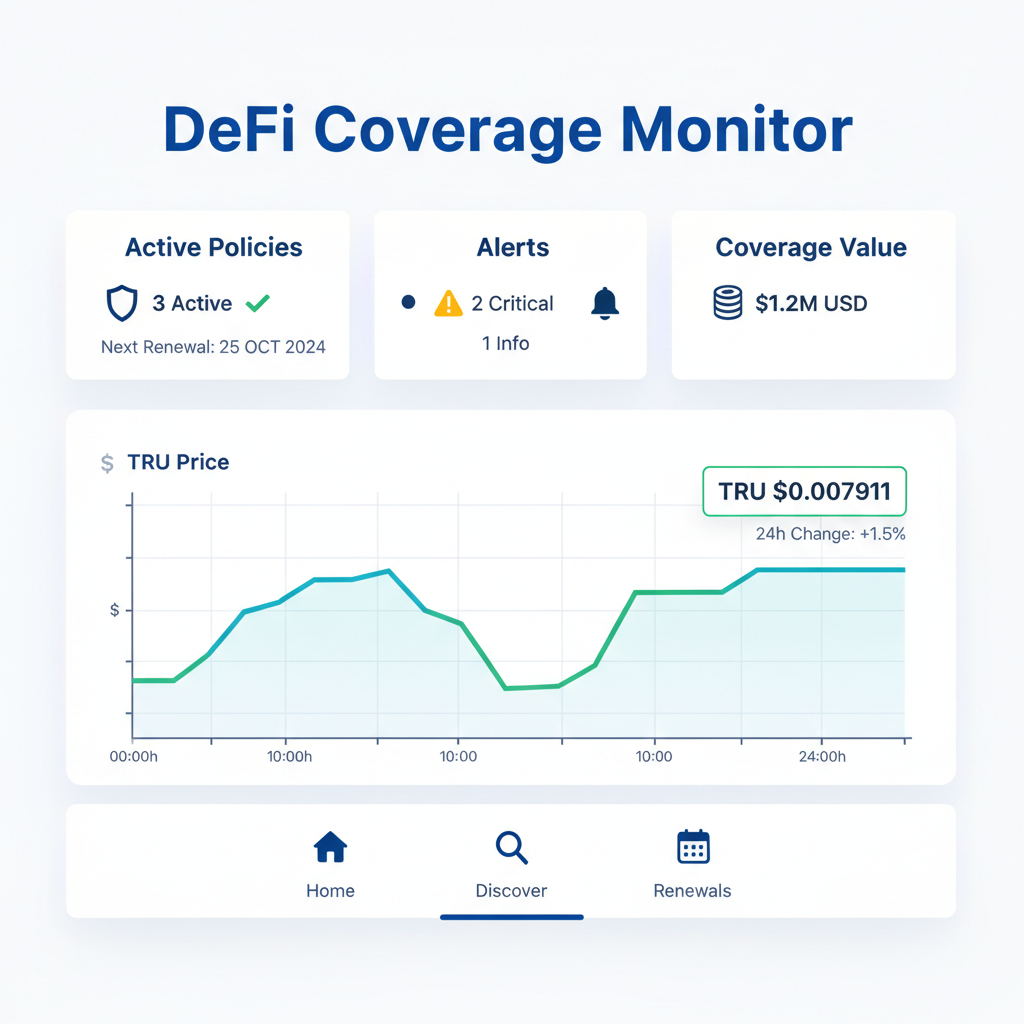

Tailored Modules for Exploit and Depeg Risks
Top DeFi Insurance Providers Comparison
Provider
Risk Rating
Coverage Types
Premium Rates
Payout Speed
Supported Protocols
Nexus Mutual
🟢
Exploit, Depeg
1.5-4%
14-45 days
100+ (Aave, Uniswap, Compound)
InsurAce
🟡
Exploit, Depeg, Custodial
0.8-3.5%
48-96 hours
Multi-chain (PancakeSwap, etc.)
Bridge Mutual
🟢
Exploit
1-2.5%
24 hours
50+ DeFi protocols
Atomica
🔵
Smart Contract Exploits, Protocol Risks
Custom (0.5-2%)
<24 hours
Tailored (e.g., legacy contracts)
About the Author